Did you know that stagnant water in an unmaintained cold water tank can reach temperatures between 20°C and 45°C during a UK summer, creating the perfect breeding ground for Legionella bacteria? For the 4.5 million commercial properties across Britain, staying on top of water safety isn't just about ticking a box; it's about protecting lives. You likely feel the pressure of keeping up with ACOP L8 regulations while managing the daily logistics of your building. It's a heavy responsibility, and the fear of a failed inspection or a health outbreak is a burden no property owner should carry alone.
We believe that professional compliance should be straightforward. This 2026 guide is designed to transform that regulatory stress into a sense of total security. You'll master the essentials of maintenance schedules, learn to spot the signs that your tank needs professional disinfection, and ensure your property meets the latest UK health standards. We've simplified the technical jargon to provide a clear, action-oriented path to water safety. This article covers everything from legal obligations to practical cleaning tips, providing you with a reliable roadmap for Compliance Care.
Key Takeaways
- Understand the critical differences between storage types to ensure your plumbing system operates safely and efficiently.
- Recognise the temperature "Goldilocks Zone" for bacteria and learn how to prevent your system from becoming a breeding ground.
- Navigate the latest UK legal frameworks and HSE guidelines to ensure your property meets every compliance standard.
- Master a professional visual inspection of your cold water tank to determine if a full system disinfection is necessary.
- Discover how laboratory analysis creates a robust audit trail, transforming complex safety duties into total peace of mind.
Understanding Your Cold Water Tank: Functions and Types
The cold water tank remains a cornerstone of UK residential and commercial plumbing. Most properties across the Midlands and the wider UK rely on these systems to provide a consistent header of pressure for taps, showers, and heating systems. A cold water tank acts as a specialised container for storing water that ensures your property has a secondary supply if the mains water is interrupted. It also prevents backflow contamination, protecting the public water supply from your internal pipework.
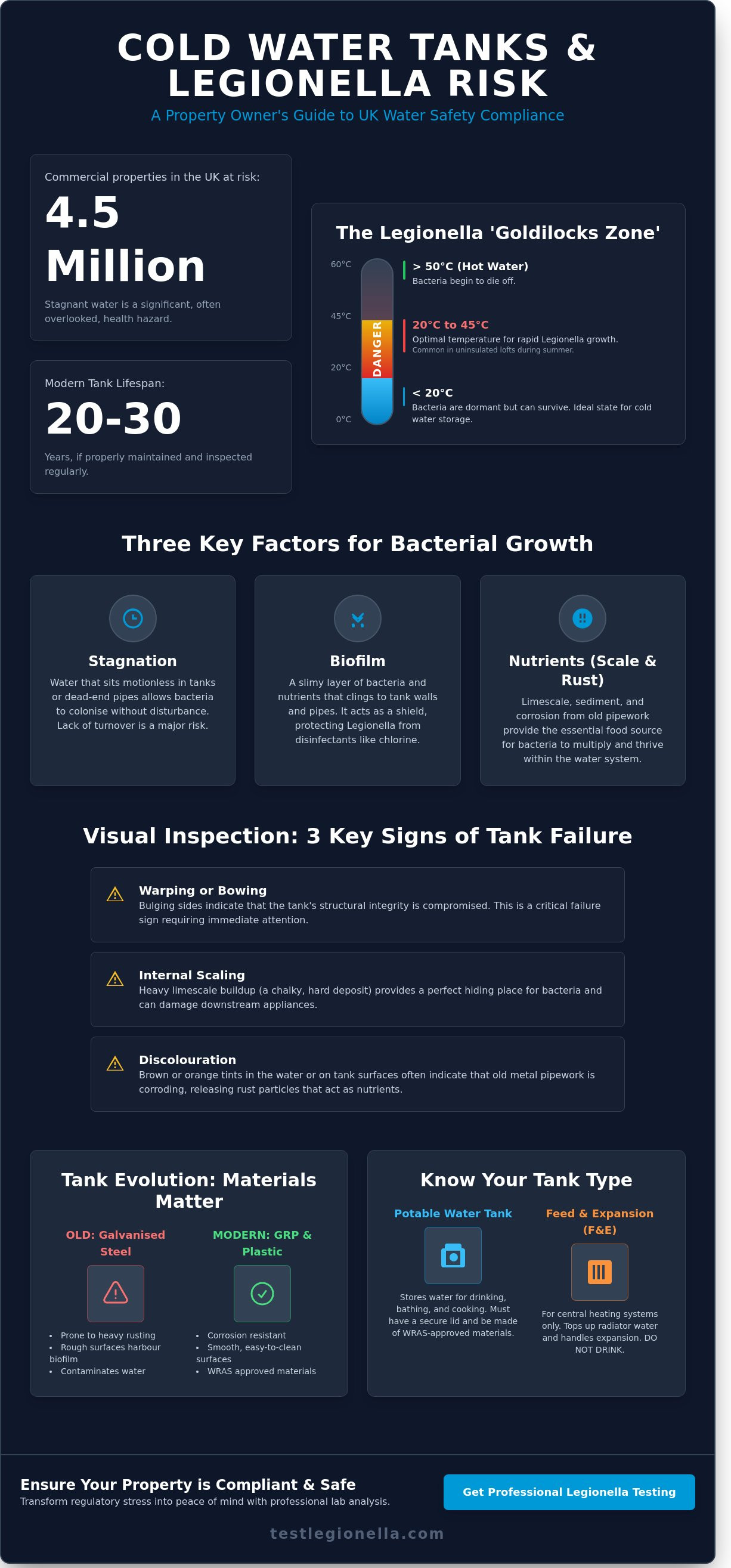
Plumbing systems generally feature two distinct types of storage. Potable water tanks store water intended for human consumption, such as drinking or bathing. Feed and expansion (F&E) tanks are smaller units specifically designed to top up the central heating system and handle the expansion of water as it heats up. You must never drink from an F&E tank, as it often contains chemical inhibitors and stagnant water.
By 2026, the industry has shifted almost entirely toward high-grade Polyethylene and Glass Reinforced Plastic (GRP). Polyethylene tanks are lightweight and resistant to corrosion, making them ideal for domestic lofts. GRP tanks offer superior structural strength for larger commercial volumes. Both materials have replaced old galvanised steel tanks, which were prone to heavy rusting and bacterial growth. Because most tanks sit in the loft, they're susceptible to temperature swings. If a tank isn't correctly insulated, water temperatures can rise above 20°C in summer, creating a perfect environment for Legionella bacteria to thrive.
Common Tank Configurations in UK Properties
Modern attic spaces are often cramped, leading to a rise in rectangular, "low profile" tank designs. These units fit through standard loft hatches more easily than traditional round tanks. For potable water, the tank must be fitted with a close-fitting lid and a screened vent to prevent insects or dust from entering. Every component, from the tank shell to the ball valve, should be WRAS (Water Regulations Advisory Scheme) approved. This certification guarantees that the materials won't contaminate the water or encourage microbial growth.
The Lifecycle of a Cold Water Storage Tank
You can expect a modern plastic cold water tank to last between 20 and 30 years. However, environmental factors in the loft can shorten this lifespan. High UV exposure or extreme temperature cycling can eventually cause plastic to become brittle. You should monitor your system for these three primary signs of failure:
- Warping or bowing: If the sides of the tank are bulging, the structural integrity is compromised.
- Internal scaling: Heavy limescale buildup can harbour bacteria and damage downstream appliances.
- Discolouration: Brown or orange tints often indicate that old metal pipework is corroding into the water.
Modern manufacturing standards like BS EN 13280 have significantly improved durability. Today's tanks are designed with smoother internal surfaces, making cleaning and disinfection a much simpler task for property owners. Keeping your tank in peak condition ensures your water remains safe and your property stays compliant with current health and safety regulations.
Health Risks: Why a Cold Water Tank Can Be a Legionella Breeding Ground
Your cold water tank is more than a storage vessel; it's a living ecosystem that requires constant vigilance. If managed poorly, it becomes the perfect incubator for Legionella pneumophila. This bacteria thrives in what specialists call the "Goldilocks Zone" — temperatures between 20°C and 45°C. In the UK, summer loft temperatures or poorly insulated plant rooms frequently push stored water into this danger bracket. When temperatures rise, a single bacterium can multiply into a colony of millions within days.
Biofilm and scale act as the primary defenders for these harmful microorganisms. Biofilm is a slimy layer of bacteria and nutrients that clings to the internal walls and base of the tank. It provides a physical shield that protects Legionella from chlorine and other disinfection efforts. Stagnation is the final ingredient for a health crisis. In properties where certain outlets are rarely used, water sits motionless for weeks. This lack of turnover allows sediment to settle and bacteria to colonise the system without disturbance, creating a high-risk environment for occupants.
Contamination Sources and Prevention
Nutrients enter your system through several common channels. Rust from ageing pipework, sediment from the mains supply, and organic matter all provide the fuel Legionella needs to grow. A loose or ill-fitting lid is a critical failure point that often goes unnoticed. It allows dust, insects, and even vermin like mice or birds to enter the water supply, introducing high levels of organic contamination. What is legionella is best understood as a naturally occurring waterborne bacterium that becomes a lethal respiratory hazard when it proliferates in man-made water systems and is inhaled via aerosolised droplets from showers or taps.
Identifying the Danger Signs
You can identify many risks through a simple visual and sensory check. Discolouration in the water, a "pond-like" earthy smell, or visible debris at the bottom of the tank are immediate red flags. If the internal surfaces feel slimy to the touch, biofilm has already established itself. Temperature remains your most reliable diagnostic tool. If your "cold" tap runs lukewarm after two minutes of flushing, your cold water tank is likely absorbing ambient heat from the building. Regular monitoring ensures you catch these issues before they escalate into a breach of health and safety law. You can check your current compliance status to ensure your property remains a safe environment for everyone.
Essential Maintenance and Legal Compliance for Property Owners
Managing a property involves more than just keeping the lights on. For UK landlords and business owners, the legal framework surrounding water safety is rigorous. Under the Health and Safety at Work etc. Act 1974, you carry a non-delegable duty to ensure your premises are safe. The Health and Safety Executive (HSE) is clear: ignorance of the law is never a valid defence during a health and safety breach. If a cold water tank becomes a breeding ground for bacteria, the responsibility stops with the duty holder. Professional compliance testing removes the guesswork, turning a complex regulatory burden into a streamlined process that protects your tenants and your reputation.
ACOP L8 and Your Responsibilities
The primary directive for water safety in the UK is acop l8, which outlines how to control Legionella bacteria in water systems. If your property has a high-risk system, you're legally required to implement a written scheme of control. This document details exactly how you'll manage risks, including maintenance schedules and emergency procedures. Proper record-keeping is vital; you must retain all compliance documents, including risk assessments and inspection logs, for at least five years. Our Compliance Care approach ensures these records are always digital, accessible, and up to date, making property management stress-free.
Temperature Control and Monitoring
Bacteria thrive in stagnant, lukewarm water. To stay compliant, your cold water storage must remain below 20°C at all times. This "below 20°C" rule is the cornerstone of safe water management. During summer months, ambient temperatures in lofts or plant rooms can skyrocket, causing heat gain within the cold water tank. High-quality lagging and tank jackets are essential to prevent this. Beyond physical barriers, you must conduct monthly temperature checks at the sentinel outlets. It's a simple task, but it's one of the most effective ways to prove your system is operating safely. We make this easy by automating your reminders and tracking every reading to ensure you never miss a deadline.
By partnering with a specialist, you transform a potentially life-threatening risk into a managed, professional standard. Our goal is to provide you with the peace of mind that comes from knowing your legal obligations are met with precision and care.
Best Practices for Inspecting and Cleaning Your Water Storage
Maintaining a cold water tank requires more than a casual glance every few years. Professional maintenance ensures your property remains compliant with HSG274 Part 2 guidelines, protecting occupants from waterborne pathogens. Before you begin, gather the right equipment. You'll need a high-intensity torch, a calibrated digital thermometer, and a pH testing kit if you're checking chemical levels. Safety is the priority. If your tank is located in a loft or a restricted height area, you must follow the Confined Spaces Regulations 1997. Never work alone in these environments; ensure a second person is present to provide assistance if needed.
The 5-Point Tank Inspection Checklist
- 1. Check the lid: The cover must be secure, light-tight, and fitted with a 0.5mm insect-proof screen on the vent. This prevents algae growth and stops vermin from entering the system.
- 2. Inspect the insulation: Verify that the lagging jacket is intact and meets BS 5422 standards. The tank base must be fully supported by a solid platform to prevent structural stress or "bowing" over time.
- 3. Evaluate the water: Use your digital thermometer to confirm the water temperature is below 20°C. Stagnant, warm water is the ideal breeding ground for Legionella bacteria. The water should be clear and free of visible biofilm or sediment.
- 4. Review the ball valve: Manually test the float to ensure it moves freely. It should shut off completely without allowing the tank to overflow or "dribble" through the warning pipe.
- 5. Examine the tank body: Look for signs of corrosion in older galvanised steel tanks or stress fractures in GRP (Glass Reinforced Plastic) units. Small leaks often manifest as white lime-scale tracking on the exterior.
Cleaning and Disinfection Procedures
Physical cleaning and chemical disinfection are distinct but related processes. A physical clean involves draining the cold water tank and scrubbing the internal surfaces to remove silt, scale, and bio-fouling. This is often necessary if a visual inspection reveals heavy debris. Chemical disinfection, or chlorination, involves treating the water with a high concentration of chlorine (typically 50mg/L for one hour) to kill microbial life. This process is mandatory after any significant system modifications or if a Legionella risk assessment identifies a specific contamination risk.
You don't always need a full disinfection every year. HSG274 recommends an annual inspection to determine if a clean is required. However, if the tank serves a high-risk environment like a care home or a healthcare facility, stricter schedules apply. Proactive monitoring keeps your building safe and ensures your "Compliance Care" remains up to date. If you've recently moved into a new property or finished a renovation, a professional disinfection provides the peace of mind that your water system is sterile and safe for use.
Keep your property safe and your records compliant with our expert support. Find out today how we make water safety management easy.
Professional Legionella Testing: Ensuring Long-Term Water Safety
A visual inspection of your cold water tank only tells half the story. While checking for debris or a secure lid is vital, these steps cannot detect microscopic pathogens. Legionella bacteria thrive in stagnant or lukewarm conditions, often colonising the sediment at the bottom of a cold water tank without leaving any visible trace. Relying solely on DIY checks leaves a dangerous gap in your safety strategy. Professional laboratory analysis is the only definitive way to confirm your water is safe for consumption and washing.
Professional testing provides a robust audit trail that is essential for legal protection in the United Kingdom. Under the Health and Safety Executive (HSE) ACoP L8 guidelines, landlords and employers hold a "duty of care" to manage biological risks. If an inspection occurs or a health issue arises, a professional certificate carries significantly more weight than a personal logbook. It proves you have taken "reasonably practicable" steps to ensure safety, backed by a UKAS-accredited laboratory. This data-driven approach removes the guesswork from property management.
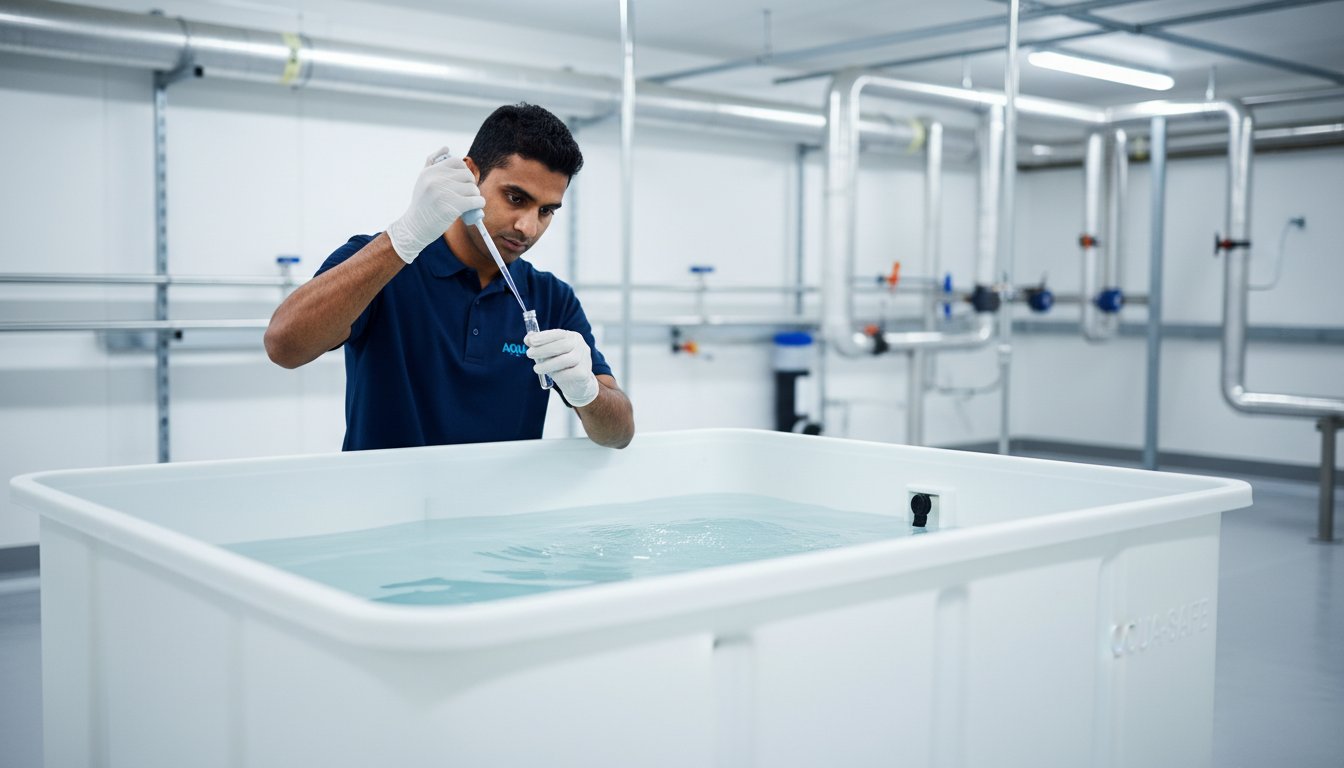
A professional water sampling visit is a streamlined process designed for minimal disruption. A specialist collects samples from the tank and the furthest points in the system, following strict chain-of-custody protocols to prevent sample degradation. These samples undergo a 10-day incubation period to check for bacterial growth. Once the analysis is complete, you receive a clear, actionable compliance report. Instead of confusing technical jargon, you get a straightforward summary of your system's health and a prioritised list of any necessary remedial works.
The Benefits of Compliance Care
- Total peace of mind: You gain the certainty that your water system is safe for every tenant, employee, or visitor.
- Operational efficiency: You don't need to track regulatory dates or complex testing intervals. Our systems manage the schedule for you, preventing missed inspections.
- Legislative expertise: You get direct access to specialists who stay updated on the latest UK health and safety laws, ensuring your property is never at risk of non-compliance.
Securing Your Property Today
Protecting your building shouldn't be a slow or difficult process. We've refined our system so you can book a professional assessment in under 60 seconds. For landlords and business owners, time is a critical factor; that's why we prioritise a fast turnaround for both site visits and laboratory results. We transform a complex regulatory burden into a simple, managed service that keeps you on the right side of the law. Don't leave your water safety to chance. Get your professional Legionella compliance quote today and ensure your property meets the highest safety standards for 2026.
Take Control of Your Building's Water Compliance Today
Managing a cold water tank requires more than a simple annual glance. With UK health and safety regulations like ACoP L8 demanding strict adherence, property owners must prioritise regular cleaning and professional risk assessments to prevent Legionella growth. Failure to maintain these systems doesn't just risk a fine; it puts lives at stake. By implementing a consistent inspection schedule, you ensure your water remains safe and your legal obligations are met without the stress of last-minute repairs.
At Test Legionella, we specialise in landlord and commercial water safety across the entire UK. Our nationwide coverage means expert compliance reports are made easy, providing you with the clear documentation needed to satisfy inspectors and insurance providers. We've designed our "Compliance Care" approach to be fast and reliable, moving you from uncertainty to complete peace of mind in record time. Don't leave your safety standards to chance when professional support is just a click away.
Get your fast, reliable Legionella compliance report today
Protecting your property is a long-term commitment, and we're here to make every step of that journey simple and efficient.
Frequently Asked Questions
Is a cold water tank lid legally required for landlords?
Yes, a tight-fitting, secure lid is a legal requirement for landlords to prevent contamination and comply with the Health and Safety at Work etc. Act 1974. The lid must be well-fitting and screened to stop debris, insects, or vermin from entering the system. This is a fundamental part of your safety obligations. Without a lid, you're in breach of ACoP L8 guidelines, which heightens the risk of bacterial growth.
How often should a cold water tank be cleaned in a UK rental property?
You should inspect your tank at least once every 12 months to determine if cleaning or disinfection is necessary. Cleaning isn't a fixed annual requirement but must be performed if the inspection reveals sediment, stagnation, or biofilm. Under ACoP L8, landlords must ensure the water system remains in a clean condition. Regular monitoring keeps your property compliant and ensures your tenants remain safe from waterborne pathogens.
What is the ideal temperature for a cold water storage tank?
Your tank must store water at a temperature below 20°C to prevent the growth of Legionella bacteria. These bacteria thrive in stagnant water between 20°C and 45°C, so maintaining a cold temperature is your primary defence. During your annual inspection, use a calibrated thermometer to check that the stored water remains sufficiently chilled, especially during summer months when loft temperatures can rise significantly.
Can I drink water directly from a cold water tank in the loft?
You shouldn't drink water directly from a standard cold water tank because it's often not potable or fresh. Loft tanks can collect dust, scale, and even small animals if the lid isn't perfectly sealed. Most UK homes use these tanks to feed bathrooms and heating systems, while the kitchen tap connects to the rising main. If your tank supplies drinking water, it must meet strict BS 8558 standards.
What are the signs that my cold water tank has Legionella?
You can't detect Legionella through sight, smell, or taste, as the bacteria are microscopic. The only way to confirm its presence is through professional laboratory analysis of a water sample. However, physical signs like heavy limescale buildup, rust, or slimy biofilm on the tank walls indicate an environment where bacteria are likely to multiply. If your tank looks neglected, it's time to book a professional compliance check.
Does my business need a professional Legionella risk assessment for its water tank?
Yes, every UK business with a water system and at least one employee has a legal duty to conduct a Legionella risk assessment. This requirement falls under the Control of Substances Hazardous to Health (COSHH) regulations. A professional assessment identifies potential hazards in your cold water tank and provides a clear action plan for compliance. It's a straightforward process that provides peace of mind and protects your staff.
What happens if a landlord fails to maintain a cold water tank?
Landlords who fail to maintain a cold water tank face heavy fines, legal prosecution, and potential imprisonment if a tenant falls ill. Under the Landlord and Tenant Act 1985, you're responsible for keeping water installations in good repair. The Health and Safety Executive can issue improvement notices or pursue criminal charges for non-compliance. Beyond the legal risks, neglect can lead to costly system failures and damage to your reputation.
How much does a professional Legionella water test cost in 2026?
A professional Legionella water test typically costs between £50 and £150 per sample based on 2025 industry benchmarks. Prices vary depending on the number of samples required and the depth of the laboratory analysis. While the test is an investment in safety, many landlords combine it with a full risk assessment to save on costs. Get a tailored quote to ensure you're only paying for the specific tests your property needs.