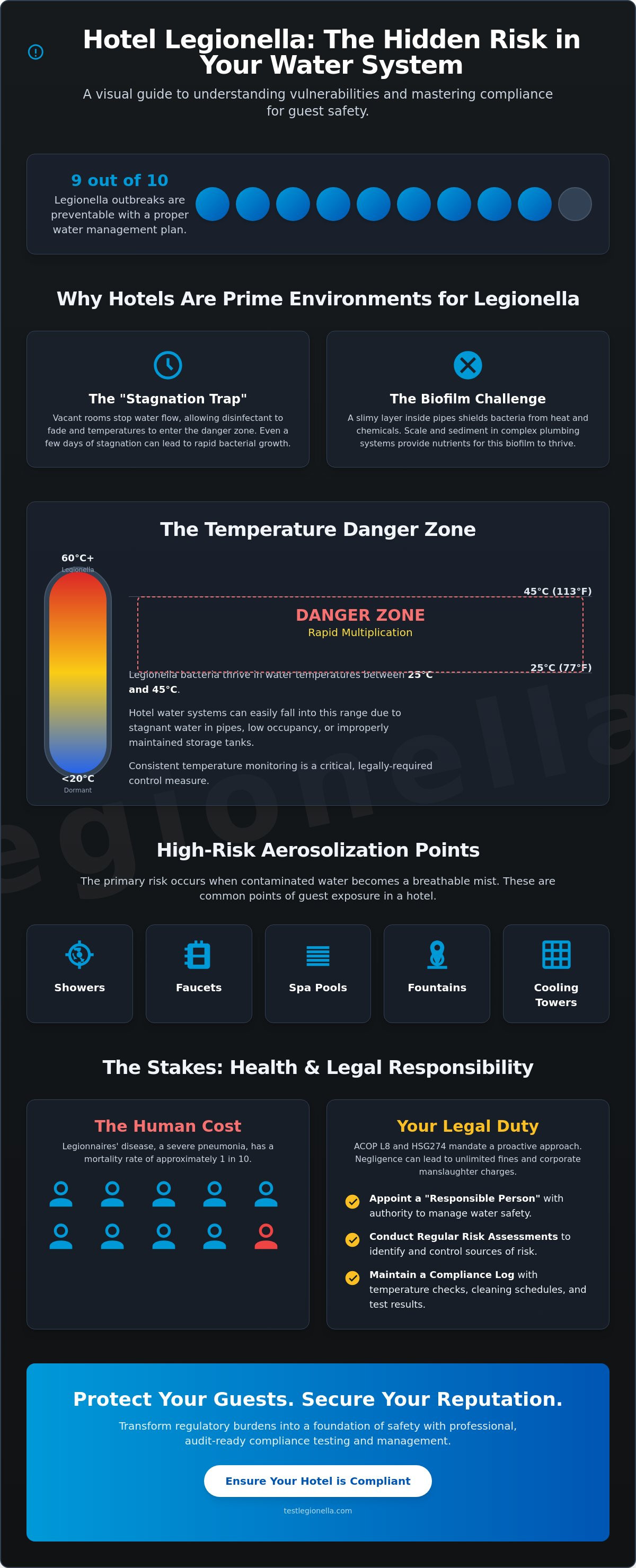
Did you know that 9 out of 10 Legionella outbreaks are preventable with effective water management? Managing safety across hundreds of guest rooms and complex cooling towers is a massive task. You're likely balancing occupancy shifts with the constant need for compliance. It's a heavy responsibility, but it doesn't have to be a source of stress. Implementing a professional strategy for hotel legionella risk management transforms these regulatory burdens into a foundation of guest safety and operational excellence.
You deserve the peace of mind that comes from total regulatory adherence. This guide helps you master the complexities of hospitality water safety with a framework built for 2026 standards. We'll show you how to handle the variable occupancy trap, maintain a streamlined water management log, and protect your reputation. We'll preview the specific protocols for flushing systems and temperature monitoring that keep your facility compliant and your guests protected. By the end of this guide, you'll have a clear path to managing water safety with confidence and ease.
Key Takeaways
- Identify why hotel plumbing systems are uniquely vulnerable and how to spot high-risk zones before they become a liability.
- Simplify your path to ACOP L8 compliance by understanding your mandatory legal responsibilities under the Health and Safety at Work Act.
- Implement a practical 'Empty Room' protocol to manage stagnant water in little-used outlets and maintain safety during occupancy shifts.
- Professionalize your hotel legionella risk management with structured compliance testing that delivers unbiased reporting and total guest protection.
- Master the complexities of high-risk assets like spa pools and cooling towers with a framework designed for 2026 safety standards.
Why Hotels are Prime Environments for Legionella Growth
Legionella bacteria are naturally occurring organisms that find their ideal habitat in the complex, man-made water systems of modern hotels. Unlike a residential home with simple plumbing, a hotel features miles of pipework, hundreds of outlets, and intricate temperature control systems. This complexity creates hidden pockets where water can linger. Effective hotel legionella risk management starts with acknowledging that your building's design inherently favors bacterial growth. It's a reality of the industry, but one that is entirely manageable with the professional framework we provide.
The "Stagnation Trap" is a unique challenge for the hospitality sector. When guest rooms remain vacant for even a few days, water flow stops. This allows disinfectant levels to drop and water temperatures to settle into the "danger zone" of 25°C to 45°C (77°F to 113°F). In these conditions, Legionella multiplies rapidly. For guests who are elderly or have underlying health conditions, exposure can lead to Legionnaires' disease, a severe form of pneumonia with a mortality rate of approximately 1 in 10. According to the CDC, 9 out of 10 outbreaks are preventable with better water management. This highlights the vital importance of moving from reactive fixes to proactive monitoring.
The Biofilm Challenge in Hospitality Plumbing
Biofilm is a thin, slimy layer of microorganisms that sticks to the internal surfaces of pipes. In older hotel infrastructure, this film acts as a biological shield, protecting bacteria from heat and chemical treatments. Scale and sediment buildup provide the necessary nutrients for the bacteria to thrive. Large-scale systems are significantly harder to disinfect than smaller buildings because these deposits accumulate in hard-to-reach dead legs and bypass valves. You need a proactive strategy to penetrate these defenses and ensure your disinfection efforts actually reach the source of the risk.
Aerosolization Points: Where Guests Encounter the Risk
The primary risk to your guests occurs when contaminated water becomes a breathable mist. Every showerhead and faucet in your facility is a potential aerosolization point. Beyond guest rooms, high-traffic features like decorative lobby fountains or outdoor misters can spread bacteria through the air. Even your air conditioning cooling towers, which are essential for climate control, can drift contaminated droplets over wide areas if not properly maintained. Identifying these points is the first step in a robust hotel legionella risk management plan. It's about protecting every breath your guests take, from the lobby to the penthouse.
The Legal Landscape: ACOP L8 and Hotel Manager Responsibilities
Compliance starts with the Health and Safety at Work Act 1974. This foundational act places a clear legal duty on hotel operators to protect guests and staff from foreseeable risks. For those managing hospitality sites, the Approved Code of Practice (ACOP L8) is your primary directive. It's a mandatory standard. Following it is recognized as evidence of compliance with the law. While ACOP L8 provides the legal framework, the HSG274 Part 2 technical guidance provides the specific instructions for hot and cold water systems. These documents form the backbone of a robust hotel legionella risk management strategy. Neglecting these standards carries severe consequences. Fines for breaches are now unlimited. In cases of fatal negligence, corporate manslaughter charges are a distinct possibility. Referencing Industry Water Safety Guidelines helps clarify how these UK standards align with international safety benchmarks.
The Role of the 'Responsible Person'
You must appoint a "Responsible Person" (RP) to oversee water safety. This individual needs sufficient authority, knowledge, and competence to take lead action. In a hotel hierarchy, this is often the General Manager or the Head of Engineering. It's not enough to simply assign the title. The RP must have the power to sign off on budgets and implement remedial works. The legal liability typically rests with the "Duty Holder," which could be the hotel owner or the management company depending on your specific contract. You should define these roles clearly to avoid gaps in oversight that lead to stagnation or temperature failures.
Mandatory Record Keeping and the Compliance Log
Maintaining a compliance log isn't optional. Your records must include risk assessments, temperature monitoring results, and cleaning schedules. By 2026, the industry has shifted toward digital, audit-ready records to ensure transparency and rapid retrieval during inspections. ACOP L8 requires you to keep these records for at least five years. This includes evidence of your written scheme of control and any corrective actions taken. For a deeper dive into these requirements, read our complete guide to Legionella compliance. If you're unsure about your current status, booking professional compliance testing is the most efficient way to verify your system's safety and secure your guest's peace of mind.
Identifying High-Risk Assets: Beyond the Standard Guest Room
While guest rooms are the most visible part of your water system, they represent only a fraction of your total risk profile. Effective hotel legionella risk management requires a deep dive into hidden assets that offer the perfect conditions for bacterial proliferation. Commercial kitchens, for instance, often house ice machines and pre-rinse sprays that are susceptible to warming if pipework runs near heat-generating appliances. These often-overlooked outlets can harbor stagnant water, especially during slow service periods, creating a silent hazard in the heart of your food and beverage operations.
Many hotel managers face increasing pressure to meet sustainability targets by lowering boiler temperatures. This is the "Eco-Trap." Dropping storage temperatures below 60°C (140°F) to save energy directly contradicts ACOP L8 and HSG274 guidance. It creates an environment where bacteria thrive rather than perish. You must balance energy efficiency with the non-negotiable requirement to keep hot water hot and cold water cold. Safety cannot be sacrificed for a lower utility bill; the cost of an outbreak far outweighs any marginal energy savings.
Spa Pools and Leisure Facilities
Leisure facilities are high-stakes environments. Spa pools and hot tubs carry heavy organic loads from bathers, including skin cells and lotions, which provide a rich nutrient source for Legionella. Under HSG282, you must perform daily pH and disinfectant testing to ensure the water remains safe. The powerful jets in these systems are designed to create aerosols, which guests then inhale. Without specialized cleaning protocols and regular filter maintenance, a relaxing spa visit can quickly turn into a significant health risk. Professional hotel legionella risk management ensures these high-risk areas are monitored with the frequency they demand.
Cooling Towers and Evaporative Condensers
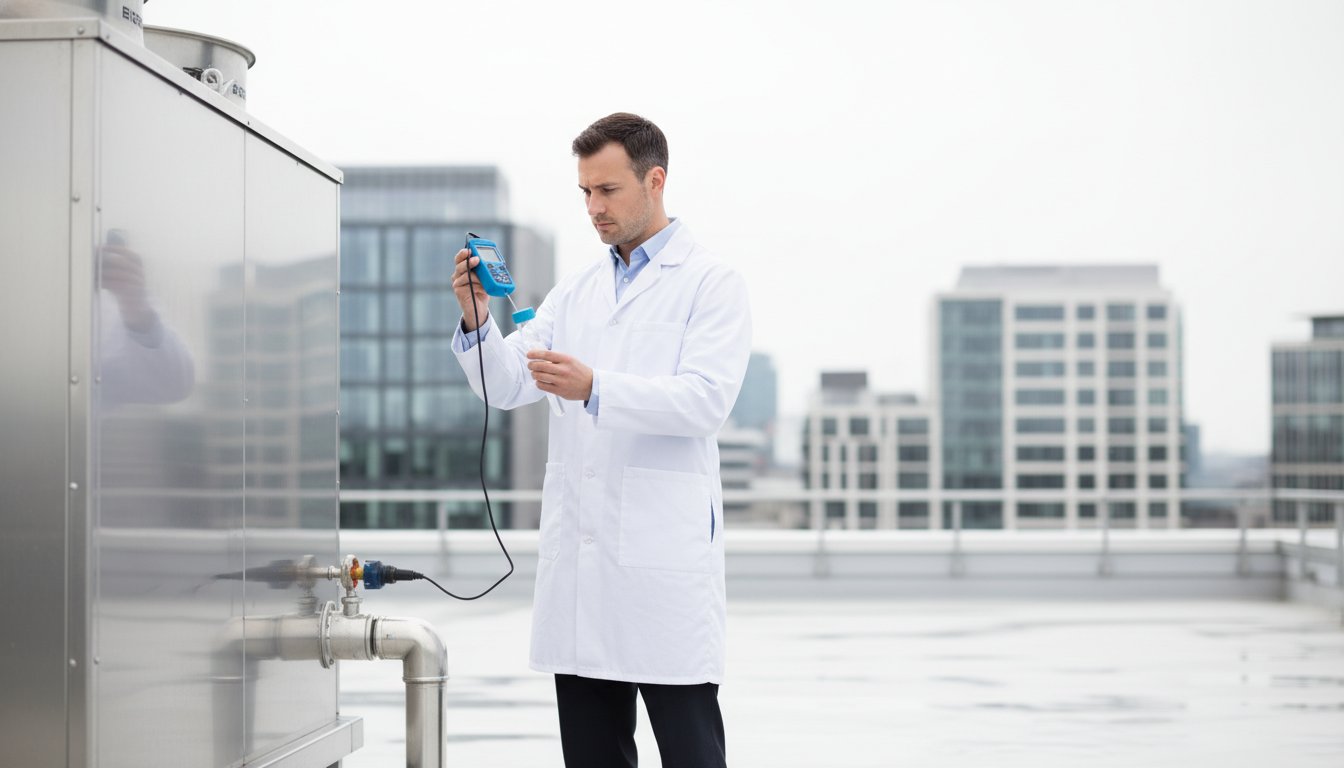
If your hotel utilizes cooling towers or evaporative condensers, your regulatory burden increases significantly. These assets are high-volume aerosol generators capable of spreading bacteria over several kilometers. You're legally required to notify your Local Authority of their presence. Maintenance must include regular biocide treatments and the inspection of drift eliminators to minimize droplet release. Because of their high-risk nature, these systems demand the most frequent professional sampling to verify that your chemical control regime is actually working. Regular monitoring is the only way to transform this technical complexity into a sense of operational security.
Operationalizing Safety: The 'Empty Room' Protocol
Variable occupancy is the single biggest operational challenge in hotel legionella risk management. When a guest room sits empty for even a few days, the water inside the pipes stops moving. This creates what UK safety standards define as 'Little Used Outlets' (LUOs). Any tap or shower used less than once a week is a high-risk point for bacterial growth. Stagnant water loses its residual disinfectant and quickly reaches ambient temperatures that fall within the Legionella growth range. You must bridge this gap with a disciplined, documented flushing regime that mimics normal usage.
Flushing isn't just about running a tap until the water feels cold. It's a calculated safety procedure designed to draw fresh, treated water from the main through to the very end of the pipework. This process physically clears out sediment and refreshes the temperature, ensuring that the 'danger zone' conditions discussed in previous sections don't take hold. For your housekeeping team, this protocol should be as standard as changing the linens. Without it, you leave your facility vulnerable to the stagnation trap that often precedes an outbreak.
The Weekly Flushing Cycle
Establish a mandatory routine where every outlet in a vacant room is flushed for at least 2 minutes every week. This applies to washbasin taps, bath taps, and showers. Staff safety is paramount during this process. To minimize the risk of inhaling aerosols, your team should place a plastic bag over showerheads with a corner cut out or submerge the head in a bucket of water while flushing. Every action must be recorded in a dedicated 'Flushing Log.' This log should track the room number, the date, and the duration of the flush. These records are your primary defense during a health and safety audit, providing the necessary evidence that you're actively managing your written scheme of control.
Re-Commissioning Rooms After Long-Term Closure
If a floor or wing has been closed for more than seven days, a standard weekly flush may be insufficient. Long-term stagnation allows biofilm to thicken and bond to the internal surfaces of your pipes. In these scenarios, you must implement a more rigorous re-commissioning protocol. This often involves a full system thermal or chemical disinfection before guests are allowed to check in. If a room has been offline for several weeks, professional water sampling is the only way to verify that your system is safe. Don't leave your reputation to chance. Ensure your protocols are airtight and your water is safe by scheduling Legionella compliance testing to validate your flushing regime's effectiveness.
The Role of Professional Compliance Testing and Reporting
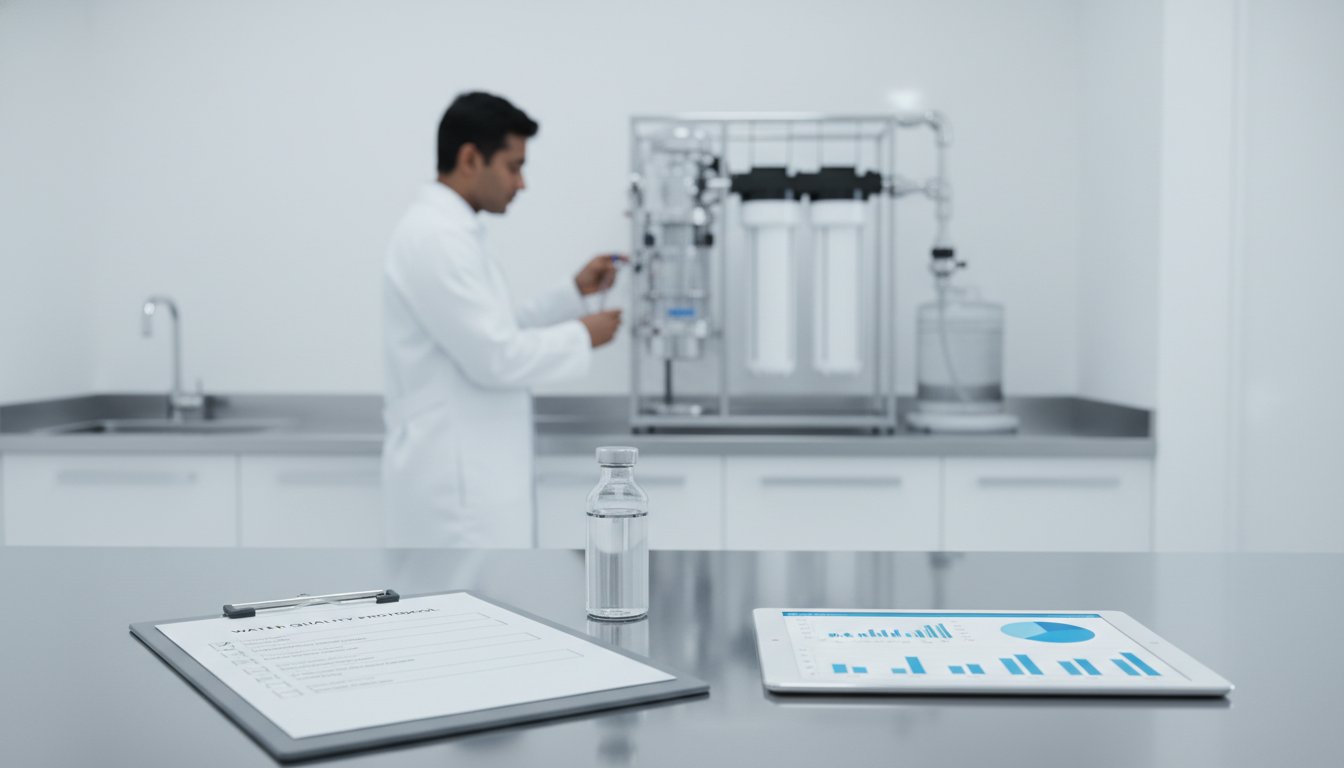
Professional hotel legionella risk management relies on two distinct but equally vital components: the Legionella Risk Assessment (LRA) and ongoing water sampling. While the LRA serves as your foundational strategy by identifying potential hazards in your plumbing and management structure, sampling provides the scientific proof that your controls are working. You shouldn't confuse the two. An LRA tells you where the risks are; sampling tells you if the bacteria are actually present. Relying on an independent, third-party specialist for this testing is essential for maintaining unbiased compliance. It removes any conflict of interest, ensuring that your safety data is accurate and legally robust.
Using a UKAS-accredited laboratory for your analysis is a non-negotiable standard for legal protection. In the event of a health and safety audit or a civil claim, these accredited results carry the necessary weight to prove due diligence. A professional report does more than just list numbers. It provides a clear, prioritized roadmap for remedial works, transforming complex technical data into a manageable task list. This structured approach allows you to address the most critical vulnerabilities first, ensuring your budget is spent where it has the greatest impact on guest safety.
What to Expect from a Professional Hotel Assessment
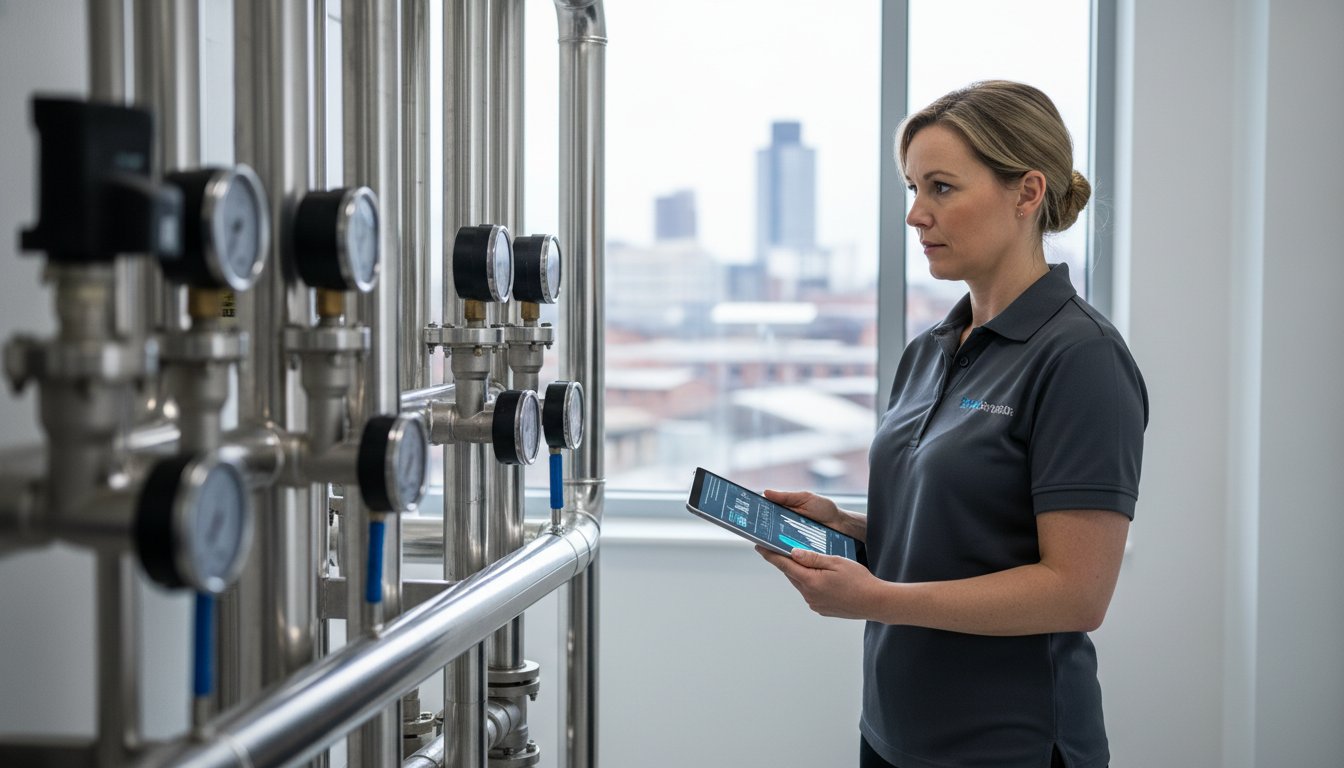
A comprehensive assessment involves a rigorous physical inspection of your entire water system. This includes examining cold water storage tanks for debris, checking calorifiers for correct storage temperatures, and inspecting representative outlets across all floors. Your specialist will also review your management procedures, staff training records, and the flushing logs discussed in the previous section. This holistic view ensures that your physical assets and your operational protocols align. The process concludes with a 'Remedial Action Plan,' a specific document that outlines exactly what you need to fix, replace, or monitor to achieve total regulatory compliance.
Frequency of Testing: Staying Ahead of the Risk
Staying ahead of bacterial growth requires a consistent schedule of monitoring and validation. Monthly temperature checks and visual inspections of tanks are standard requirements under ACOP L8. However, for high-risk hospitality environments with spa facilities or cooling towers, quarterly or six-monthly water sampling is often the most appropriate way to validate your chemical and thermal control regimes. Regular testing intervals ensure that any system failures are caught before they escalate into a crisis. For help with budget planning and understanding the market rates for these services, consult our Legionella risk assessment cost guide. Implementing a proactive testing schedule is the final step in moving your hotel legionella risk management from a state of uncertainty to a position of professional excellence.
Achieving Long-Term Water Safety Excellence
Effective water safety is an ongoing commitment to operational excellence. By mastering the "empty room" protocol and addressing high-risk assets like spa pools and cooling towers, you protect both your guests and your business reputation. Compliance with ACOP L8 isn't just a legal necessity; it's the foundation of a secure, well-managed facility. Your journey to total peace of mind involves shifting from reactive maintenance to a proactive, professional framework.
Professional hotel legionella risk management ensures that every tap, shower, and cooling system operates within safe parameters. We provide UKAS-accredited laboratory analysis and expert reports specifically tailored for hospitality managers. Our fast, non-disruptive national service coverage means you can maintain safety without impacting the guest experience. It's about turning complex regulations into a clear, actionable path forward.
Secure your hotel's compliance with a professional Legionella risk assessment today.
Transform your regulatory requirements into a sense of lasting security. With the right specialist partner, managing water safety becomes a streamlined and stress-free part of your daily operations. You've built a reputation for hospitality; let's ensure your water systems reflect that same standard of care.
Frequently Asked Questions
Is a Legionella risk assessment a legal requirement for hotels in the UK?
Yes, a Legionella risk assessment is a mandatory legal requirement for all hotel operators under the Health and Safety at Work Act 1974. The ACOP L8 guidelines state that those in control of premises must identify and assess sources of risk to prevent exposure to bacteria. Neglecting this duty leaves you vulnerable to prosecution and unlimited fines if a safety breach occurs.
How often should a hotel carry out Legionella water testing?
You should review your risk assessment at least every two years or whenever there is a significant change to your water system. For physical water sampling, cooling towers require testing at least quarterly. While hot and cold water systems don't have a fixed interval, most hospitality professionals schedule six-monthly professional testing to validate that their hotel legionella risk management protocols are working effectively.
Can hotel staff perform Legionella testing and flushing themselves?
Staff can perform routine maintenance like weekly flushing and monthly temperature checks if they've received proper competency training. However, the actual Legionella compliance testing must be handled by specialists using UKAS-accredited laboratories. Independent testing provides the unbiased, third-party validation you need to prove your facility's safety during a health and safety audit.
What happens if a guest contracts Legionnaires' disease at my hotel?
Your hotel will face an immediate investigation by the local authority or Health and Safety Executive. You'll be required to produce your written scheme of control, risk assessments, and maintenance logs. If you can't prove you followed ACOP L8 standards, the business could face severe legal penalties, civil lawsuits, and long-term reputational damage that impacts your occupancy rates.
Do I need to test every single guest room for Legionella?
You don't need to sample every room; instead, you should use a strategy of "sentinel" outlets. This involves testing water at the nearest and furthest points from your water heaters and storage tanks, along with a representative sample of rooms across different floors. This focused approach gives you a clear picture of your system's health without causing unnecessary disruption to your entire guest inventory.
What temperature should hotel hot water be kept at to prevent Legionella?
Hot water must be stored at 60°C or higher within your calorifiers to kill any bacteria present. For distribution, the water should reach at least 50°C at every outlet within one minute of turning on the tap. Cold water must be kept below 20°C. Maintaining these specific temperature barriers is your primary defense against bacterial colonization in your plumbing.
How do I manage Legionella risk during a hotel renovation or partial closure?
During renovations, you must prevent stagnation by either continuing a strict weekly flushing regime or physically isolating unused pipework to prevent "dead legs." Before re-opening any closed section, you should perform a thorough system flush and conduct professional water sampling. This ensures that any bacteria that grew during the period of low flow are identified and eliminated before guests arrive.
What is the difference between a water risk assessment and a Legionella test?
A risk assessment is a comprehensive strategic audit that identifies potential hazards in your system’s design and management. A Legionella test is the physical act of taking a water sample for laboratory analysis to see if the bacteria are present. Both are vital for hotel legionella risk management; the assessment provides the roadmap, while the test provides the scientific proof of safety.