Why are some UK landlords still risking unlimited fines and potential prison sentences simply because they find coordinating multiple safety checks too difficult? We know that managing a property portfolio in 2026 feels like a constant battle against rising overheads, making the gas safety cert cost a critical factor in your annual budget. It's frustrating when hidden fees for extra appliances turn a simple inspection into an expensive headache, leaving you worried about your bottom line. You deserve a straightforward process that protects your tenants and your investment without the surprise costs.
This guide breaks down the latest market rates for 2026, helping you avoid overpaying while staying fully compliant. You'll discover how to streamline your inspections to eliminate the stress of missed deadlines and secure your peace of mind. We provide a practical preparation checklist and show you how our Compliance Care approach manages all your property requirements in one place. Let's make your regulatory adherence easy and efficient starting today.
Key Takeaways
- Understand the 2026 statutory requirements for CP12 records and the current average price range to ensure you are paying a fair market rate.
- Learn how the number of gas appliances and your specific property type directly influence your final gas safety cert cost.
- Identify the hidden risks of "paperwork-only" inspections and how ultra-low quotes can lead to inflated remedial costs and legal vulnerabilities.
- Discover how to streamline your landlord obligations by synchronising Gas Safety, EICR, and Legionella Risk Assessments into a single, efficient visit.
- Achieve total "Compliance Care" by moving beyond basic checks to a holistic safety strategy that protects your tenants and your investment.
Understanding Gas Safety Certificate Costs in the UK
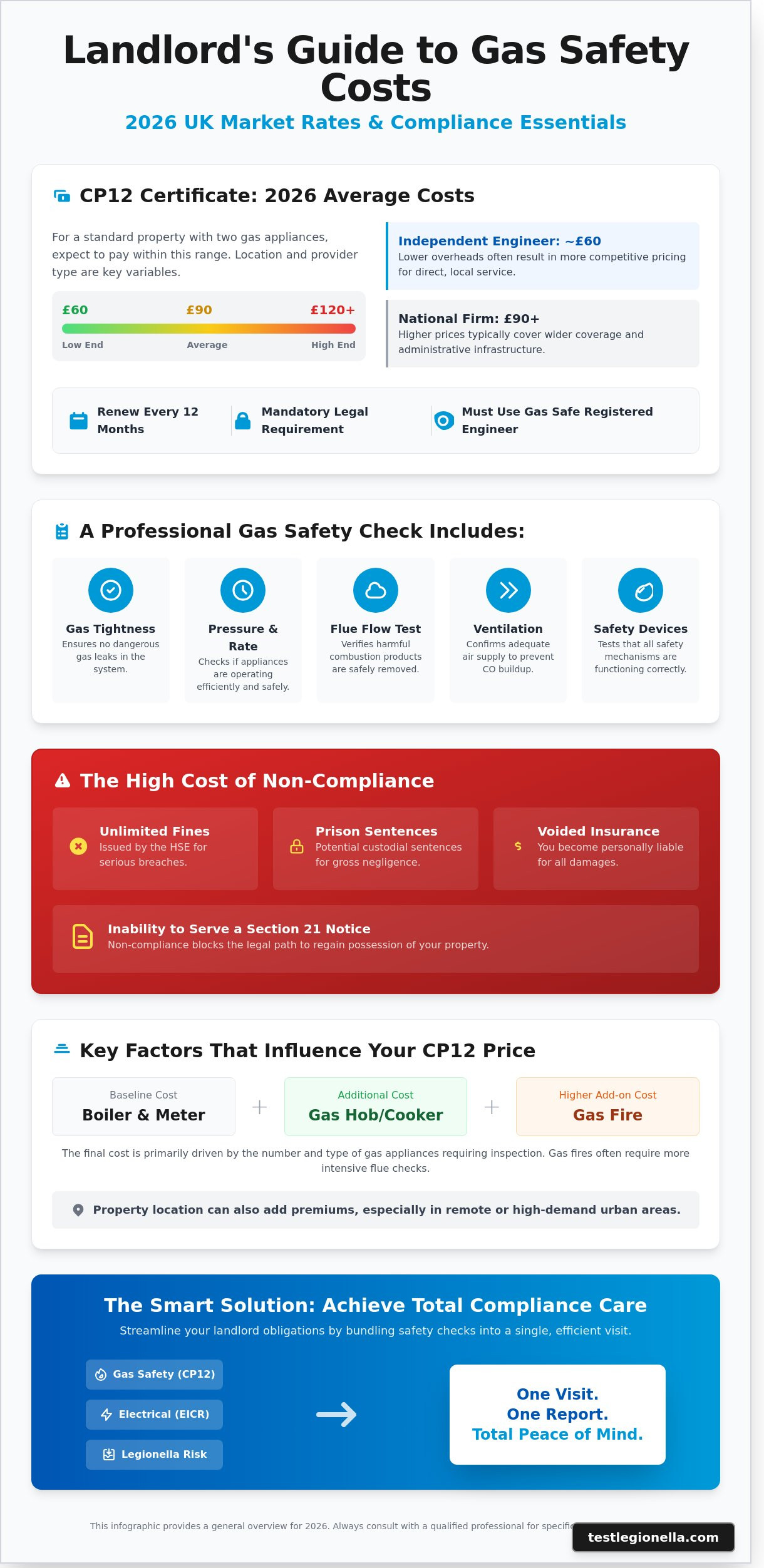
Every UK landlord knows that safety isn't optional. The Landlord Gas Safety Record, commonly known as a CP12, is a statutory requirement under the Gas Safety (Installation and Use) Regulations 1998. You must renew this certificate every 12 months to remain compliant. For a standard property with two appliances, the average gas safety cert cost in 2026 typically ranges between £60 and £120. This price fluctuates based on your location and the number of appliances that need testing.
Choosing an independent engineer often keeps costs closer to the £60 mark. These local specialists provide a direct service without the heavy overheads of corporate entities. Larger national firms usually charge upwards of £90. While they offer wider coverage, you're often paying a premium for their administrative infrastructure. Only engineers listed on the Gas Safe Register can legally perform these inspections. Using an unregistered person isn't just dangerous; it's a criminal offence that puts your tenants and your business at risk.
What is Included in a Professional Gas Safety Check?
A professional inspection is thorough and methodical. The engineer begins by checking the gas tightness of your entire system to ensure there are no leaks. They'll measure the burner pressure and gas rate against the manufacturer's data plate to confirm the appliance is operating efficiently. They also test the flue flow to ensure combustion products are being removed safely. Proper ventilation is verified to prevent the buildup of carbon monoxide. Finally, the specialist tests all safety devices to ensure they'll cut the gas supply if a fault occurs.
The Legal Consequences of Skipping Your CP12
The risks of non-compliance extend far beyond a simple paperwork error. If you fail to provide a valid CP12, you face severe penalties. The Health and Safety Executive (HSE) can issue unlimited fines or even custodial sentences for serious breaches. Beyond criminal court, your landlord insurance is likely to be voided if a gas-related incident occurs without a valid certificate. This leaves you personally liable for damages.
Compliance also impacts your ability to manage the tenancy effectively. You cannot serve a Section 21 notice to evict a tenant if you haven't provided them with a current gas safety record. If you plan to sell or refinance, your gas safety cert cost is a minor investment compared to the delays caused by missing documentation. Lenders and solicitors will halt any transaction until you prove the property meets all safety standards. Regular checks deliver the peace of mind that your investment is protected and your tenants are safe.
Key Factors That Influence Your CP12 Certificate Price
Your total gas safety cert cost isn't a random figure. It reflects the time, technical skill, and risk management required to ensure your property remains legal and safe. While some providers offer a flat rate, most professional quotes depend on the specific hardware and property layout involved. Understanding these variables helps you avoid unexpected charges and ensures you're paying for a thorough, compliant inspection rather than a rushed tick-box exercise.
The primary driver of cost is the volume of gas-burning equipment. Every appliance requires individual testing for gas tightness, burner pressure, and ventilation. An engineer must also verify that safety devices work correctly and that harmful flue gases are being safely extracted. Because a gas fire requires a more intensive flue flow test than a standard hob, it often commands a higher individual fee. Beyond the hardware, your location and the engineer’s travel time play a role, particularly in densely populated urban centres, remote rural locations, or regions with limited engineer availability, where call-out premiums are standard.
The "Per Appliance" Pricing Model
Most engineers use a tiered structure. A basic inspection usually covers one boiler and the gas meter. Adding a gas hob or a secondary water heater typically adds a fixed increment to the bill. Gas fires are often the most expensive add-on because they require a visual inspection of the entire chimney or flue length. You can keep costs predictable by identifying all "hidden" appliances before the engineer arrives. Check for secondary water heaters in utility rooms or outdoor gas-powered heaters that fall under your landlord gas safety duties to ensure nothing is missed during the site visit.
- Standard Boiler: Usually the baseline for any quote.
- Gas Hobs and Cookers: Generally the most affordable additions.
- Gas Fires: Require additional time for smoke pellet tests and flue draught checks.
- Capped Points: Even if an appliance is removed, the capped pipework must be checked for leaks.
Commercial vs Residential Gas Safety Costs
Commercial properties operate under a different set of regulations than domestic homes. A commercial kitchen or an industrial warehouse with high-output boilers requires an engineer with specific commercial tickets, which are more expensive to maintain than domestic Gas Safe registrations. The complexity of the pipework is also significantly higher. In a commercial setting, engineers must often test interlocking systems that shut off the gas if the extraction fan fails. This level of technical scrutiny means commercial certificates are priced higher to reflect the specialised expertise required.
For residential blocks or HMOs (Houses in Multiple Occupation), the price might fluctuate based on the number of individual meters and the accessibility of the pipework. If an engineer has to gain access to five different flats in one trip, the efficiency can lead to a lower price per unit. However, if access is restricted or the pipework is concealed within ceiling voids, the inspection time increases. You can simplify this process and secure your property's safety by requesting a tailored compliance quote that covers your specific property type.
Why the Cheapest Gas Safety Check Might Cost You More
Opting for the lowest quote often backfires. Some rogue traders offer "paperwork-only" checks for as little as £30, but these provide zero protection. If a technician doesn't physically inspect the flue or test gas tightness, the document is worthless. Your gas safety cert cost should reflect a professional's time and expertise, not just a signature on a page. Professional reliability ensures that your property remains compliant and your tenants stay safe.
Cheap quotes frequently serve as "loss leaders." An engineer might offer a cut-price inspection only to "discover" non-existent faults. They then charge inflated rates for remedial work to recoup their margins. A mid-range price of £60 to £95 for a single appliance is standard for a thorough 45-minute inspection. This transparency avoids hidden fees and provides genuine peace of mind. If an initial cut-price inspection is deemed invalid by a local authority or insurer, the cost of re-testing means you pay twice for the same result.
Identifying a Qualified Gas Safe Engineer
Always verify the Gas Safe ID card before work begins. Don't just look at the front; check the reverse to see if the engineer is qualified for your specific appliances, such as unvented cylinders or gas fires. Reputable firms carry at least £2 million in public liability insurance to protect your property. Test Legionella advocates for these verified professional standards to ensure your Compliance Care is handled by experts. Checking the register takes 30 seconds and prevents illegal gas work.
The True Cost of a Failed Inspection
Landlords have a legal duty to provide a gas safety record every 12 months. If your appliances fail, they are classified as "At Risk" (AR) or "Immediately Dangerous" (ID). An ID classification means the gas supply is capped immediately for safety. Standard labour rates for repairs in the UK typically range from £65 to £110 per hour depending on your location. If the engineer needs to order parts, you must budget for a second visit fee, which often costs between £45 and £70. Investing in a quality initial check reduces the gas safety cert cost over time by identifying minor issues before they become expensive emergencies. Get your quote today to secure a fixed-price inspection from a trusted specialist.
How to Organise Your Property Compliance Efficiently
Managing a rental portfolio doesn't have to be a logistical nightmare. Smart landlords treat compliance as a single, streamlined project rather than a series of disconnected chores. By aligning your Gas Safety check with your EICR and Legionella Risk Assessment, you reduce the time spent chasing keys and coordinating with tenants. This proactive approach transforms a complex regulatory burden into a predictable annual routine.
Using digital compliance trackers is the most effective way to protect your margins. These tools send automated reminders 30 or 60 days before a certificate expires, helping you avoid the £150 plus premium often charged for emergency, same-day inspections. When you stay ahead of the clock, you maintain the power to shop around for the best rates rather than paying whatever a last-minute engineer demands.
Bundling Safety Services: A Landlord’s Secret to Saving
The most effective way to lower your overall gas safety cert cost is to bundle services. Many specialist providers offer discounted rates when you book multiple inspections for the same visit. This approach eliminates repeated access fees, which often add £30 to £50 to individual bills. Linking your water safety checks with gas inspections ensures a robust compliance file and satisfies the 2018 Gas Safety Regulations. These rules allow you to carry out checks up to two months before the expiry date while keeping the original renewal date. It's an MOT-style window that prevents last-minute panics and keeps your tenants safe without constant disruption.
A Pre-Inspection Checklist for Landlords
Efficiency depends on the engineer's ability to work without delays. If an engineer arrives and can't access the boiler or the gas meter lacks credit, you'll likely face a no-access charge. Follow these steps to keep the process smooth:
- Check the Meter: Ensure at least £10 credit is on pre-payment meters to allow for full appliance testing.
- Clear Access: Remove clutter around the boiler, water tanks, and gas meters before the engineer arrives.
- Documentation: Leave the boiler manual or manufacturer’s instructions in a visible spot for the technician.
- Tenant Liaison: Provide tenants with at least 24 hours' notice as required by the Landlord and Tenant Act 1985 to ensure entry is granted.
By preparing the property, you ensure the engineer finishes the job in one visit. This prevents the gas safety cert cost from escalating due to follow-up appointments or administrative surcharges. It's about professional management that values both your time and your budget.
Beyond Gas: Achieving Total Property Compliance
While budgeting for your gas safety cert cost is a priority for any landlord, it represents just one pillar of your legal obligations. Total property compliance requires a holistic approach that covers gas, electricity, fire, and water hygiene. Relying solely on a gas check leaves your tenants at risk and your business exposed to legal challenges. In the current regulatory climate, local authorities are increasing their scrutiny of rental standards, making a comprehensive safety strategy essential for long-term success.
Centralising your compliance tasks reduces the administrative burden and ensures nothing slips through the cracks. By viewing your safety certificates as a unified shield rather than isolated chores, you create a safer environment for tenants and a more robust defence for your investment. This proactive mindset transforms a complex regulatory burden into a streamlined management routine.
Legionella Risk Assessments: The Next Step
In 2026, water hygiene has moved to the forefront of property safety. You must organise a legionella risk assessment to identify and manage potential hazards in your property's water system. While your gas safety cert cost covers the heating and cooking appliances, the water assessment ensures that the pipes and tanks don't harbour life-threatening bacteria.
Water safety checks are often more affordable than gas inspections, typically ranging from £50 to £100 for standard residential properties. Integrating these assessments into your annual maintenance schedule is simple. Most landlords find it most efficient to book water and gas checks simultaneously, ensuring the property is fully vetted in a single visit. This approach saves time, reduces tenant disruption, and guarantees that your compliance documents are always up to date.
The Test Legionella Compliance Advantage
We specialise in removing the stress from property management. Our focus is on providing professional, authoritative reporting that gives you absolute clarity on your property's status. We've designed our process to be fast and reliable, transforming water safety and legionella compliance into a transparent, manageable task. You won't have to worry about dense legal jargon; we provide clear, actionable insights that keep your tenants safe.
Our Compliance Care service is built for busy landlords who value efficiency. We offer:
- Rapid turnaround on all professional reports.
- Tailored assessments based on your specific property type.
- Proactive reminders so you never miss a deadline.
- A dedicated team of experts focused on the Midlands region.
Don't leave your property's safety to chance. Ensure your property is fully compliant; Get a quote for your Legionella assessment today and experience the peace of mind that comes with professional management.
Secure Your Property Compliance Strategy for 2026
Navigating the gas safety cert cost is just the first step in maintaining a safe and legal rental property. As UK regulations continue to evolve, landlords must focus on quality over the lowest price to avoid legal pitfalls. You've seen how grouping your inspections and choosing certified engineers protects your investment. True peace of mind comes from a comprehensive approach that covers every statutory obligation without the stress of managing multiple contractors. We're specialists in UK landlord safety regulations, delivering detailed compliance reports within 24 hours of assessment. Our fixed-fee pricing means you'll never deal with hidden surprises or sudden cost hikes. While your CP12 is vital, Legionella risk assessments are equally mandatory under HSE ACoP L8 guidelines. We've made the process simple and reliable so you can focus on your business.
Secure your property compliance-book your Legionella assessment today
Take control of your landlord duties today and enjoy the confidence of a fully protected property portfolio.
Frequently Asked Questions
Is a Gas Safety Certificate a legal requirement for all UK landlords?
Yes, the Gas Safety (Installation and Use) Regulations 1998 mandate that all UK landlords with gas appliances must have an annual inspection. This legal obligation applies to every residential property you let out. You must provide a copy of the record to existing tenants within 28 days of the check or to new tenants before they move in.
How much does a Gas Safety Certificate cost for a standard 3-bedroom house?
A standard gas safety cert cost for a 3-bedroom house typically ranges from £60 to £100 depending on your location and the number of appliances. Prices in London often sit at the higher end of this scale. Most basic quotes cover two appliances, such as a boiler and a gas hob; additional items are usually charged at £10 to £15 each.
Can I carry out a gas safety check myself to save on costs?
No, you cannot legally perform your own gas safety inspection unless you're a qualified engineer on the Gas Safe Register. The law requires a professional with the correct credentials to verify that your system is safe. Attempting a DIY check voids your insurance and leads to heavy fines or prosecution under UK safety legislation.
How long does a Gas Safety Certificate inspection usually take?
A professional gas safety inspection generally takes between 30 and 60 minutes to complete. This timeframe allows the engineer to test the tightness of the system, check burner pressure, and verify that all flue gases are exhausting correctly. Larger properties with multiple gas fires or water heaters will naturally take longer to inspect thoroughly.
What happens if my gas appliances fail the safety check?
If an appliance fails, the engineer will categorise the fault as either "Immediately Dangerous" or "At Risk" and provide a warning notice. You'll need to repair or replace the faulty equipment before a pass certificate can be issued. Resolving these issues quickly ensures your property remains compliant and your tenants stay protected from carbon monoxide risks.
Do I need a new Gas Safety Certificate for every new tenant?
You don't need a new certificate for every new tenancy if the current one is still within its 12-month validity period. The law focuses on the annual renewal date rather than the move-in date of your tenants. However, you're legally required to give the new occupants a copy of the valid CP12 record the day they start their lease.
Are there any hidden costs in a CP12 inspection?
Hidden costs usually stem from having more than two gas appliances or needing immediate minor repairs to pass the inspection. Some providers charge extra for the administrative task of issuing the digital certificate itself. To avoid surprises, always confirm if the quoted gas safety cert cost includes VAT and covers every gas appliance in the property.
Can I bundle my Gas Safety check with a Legionella risk assessment?
Yes, bundling your gas safety check with a Legionella risk assessment is a smart way to streamline your property management. Combining these services reduces the number of separate appointments you need to coordinate with tenants. It often results in a lower overall price compared to booking each compliance service individually; this provides you with total peace of mind.