Your annual Gas Safety Certificate is a legal non-negotiable, yet it won’t protect you from a Health and Safety Executive (HSE) prosecution if your water systems are neglected. Many UK landlords mistakenly believe that water safety is an optional extra, but failing to carry out a legionnaires risk assessment for landlords can result in fines exceeding £20,000 and serious legal liability. It’s a complex regulatory burden that often feels designed to catch you out.
We understand that you want to protect your tenants without getting bogged down in endless paperwork. This 2026 guide simplifies the process, ensuring you meet your legal duties under ACOP L8 with total confidence. We’ve designed this as part of our Compliance Care approach to make property management stress-free and straightforward. It’s about transforming a daunting task into a manageable routine that keeps your business safe.
You’ll learn exactly how to document your safety checks for insurance purposes, the critical differences between gas and water regulations, and how to implement a reliable water safety plan in under thirty minutes. Let’s get your properties compliant and your peace of mind restored today.
Key Takeaways
- Master your legal obligations under HSWA and COSHH to ensure full water safety compliance and protect your business from heavy fines.
- Navigate the "competence trap" when conducting a legionnaires risk assessment for landlords to ensure every hidden biological risk is professionally identified.
- Identify the critical temperature danger zones and physical inspection points essential for maintaining a safe, bacteria-free water supply for your tenants.
- Establish a proactive maintenance routine for vacant and occupied properties to ensure your compliance remains current and your liability is minimised.
- Transform complex regulatory requirements into a simple, manageable process that provides total peace of mind and professional security.
Understanding the Legionnaires’ Risk Assessment for Landlords
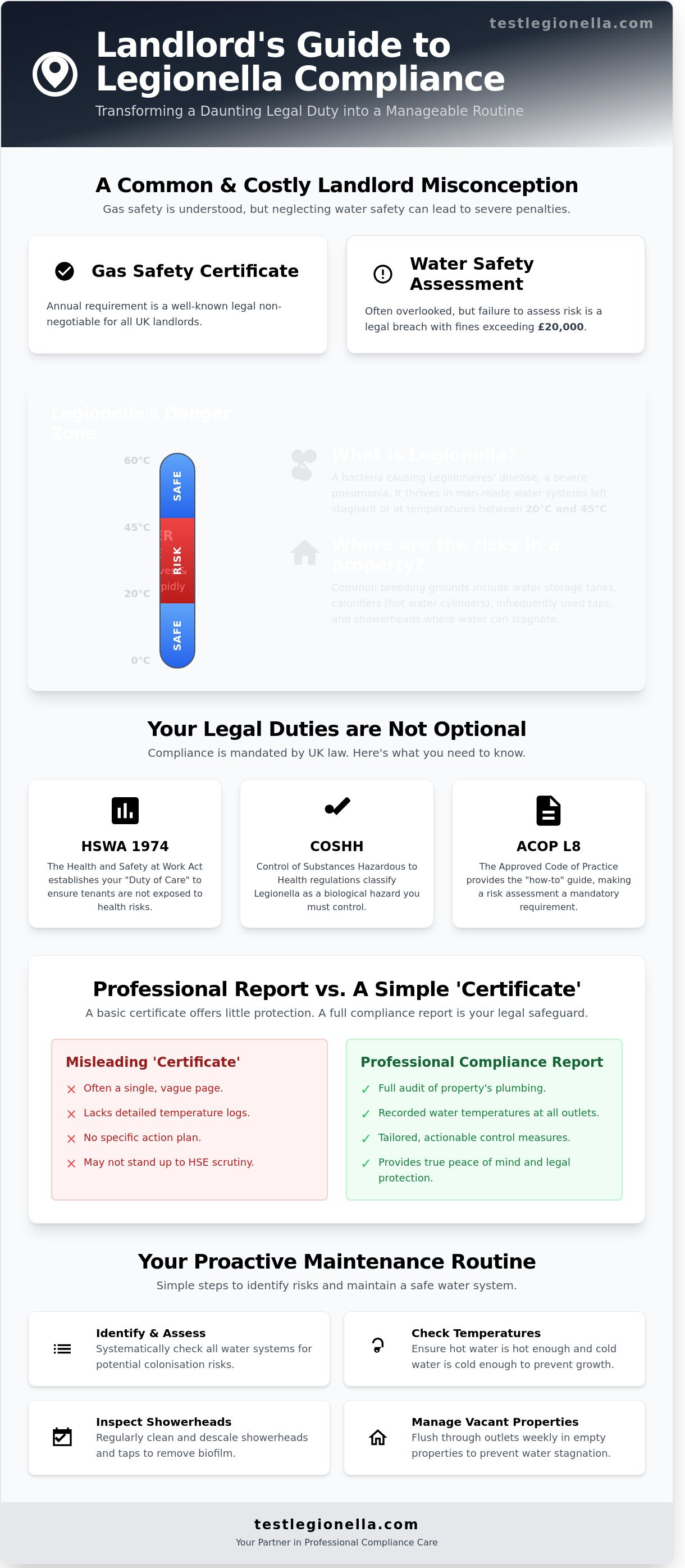
A legionnaires risk assessment for landlords acts as a foundational safety requirement for any rental property in the UK. It's a systematic evaluation of your water systems to identify potential areas where Legionella bacteria can colonise. These bacteria thrive in temperatures between 20°C and 45°C, making man-made systems like water storage tanks, calorifiers, and even simple showerheads perfect breeding grounds if they're poorly maintained or left stagnant. By identifying these hazards early, you can implement simple control measures that keep your tenants safe and your business compliant.
Under UK law, the definition of a "landlord" is broader than many people realise. Whether you manage a large portfolio of multi-occupancy buildings or simply let out a single room in your primary residence, you have the same legal responsibilities. If you receive a rental income from a property, you're responsible for the health and safety of the people living there. This includes ensuring the water system is free from biological hazards that could cause serious illness.
There's often confusion regarding the difference between a "Legionella Certificate" and a professional compliance report. While many landlords ask for a certificate, this is technically a misnomer. A certificate is often just a single sheet of paper with very little detail. A professional compliance report, however, is a comprehensive document that provides a full audit of your property’s plumbing, recorded water temperatures, and a tailored action plan. This detailed report is what provides you with true peace of mind and protection during a health and safety audit.
What is Legionnaires’ Disease and Why is it Your Responsibility?
Legionnaires' disease is a severe form of pneumonia caused by inhaling small droplets of contaminated water, known as aerosols. Symptoms typically include a persistent cough, high fever, and muscle aches; for vulnerable tenants, the condition can be fatal. As a landlord, you have a "Duty of Care" under the Health and Safety at Work etc. Act 1974. You're legally bound to ensure that the water systems you provide don't pose a risk to residents or visitors. We make this process simple by providing clear, actionable steps to manage these risks effectively.
Is a Legionella Risk Assessment Legally Mandatory?
Yes, it's a legal requirement. Every landlord in the UK must carry out a legionnaires risk assessment for landlords to identify and control the threat of bacteria. A common misconception is that these rules only apply to large commercial buildings or cooling towers. In reality, the Health and Safety Executive (HSE) specifies that domestic rental properties are also subject to these regulations. To understand your specific obligations for 2026, you should refer to the ACOP L8 guidelines. These standards define your duties and provide the framework for professional Compliance Care, ensuring your property remains a safe place to live.
The Legal Framework: HSE and ACOP L8 Requirements
Understanding your legal responsibilities for landlords starts with two primary pieces of legislation. The Health and Safety at Work Act (HSWA) 1974 and the Control of Substances Hazardous to Health (COSHH) regulations form the backbone of UK water safety law. Under COSHH, Legionella bacteria is classified as a biological hazard. This means you have a statutory duty to prevent or control exposure to your tenants. The law is clear: you must identify the risks and take steps to mitigate them.
The Approved Code of Practice L8 (ACOP L8) provides the specific technical guidance needed to meet these legal duties. It requires landlords to carry out a legionnaires risk assessment for landlords to determine the level of risk within the property's water system. This isn't a optional "best practice" suggestion; it's a mandatory requirement for anyone renting out property, including residential houses, flats, and HMOs. Ignoring these rules leaves you vulnerable to severe legal repercussions.
- Fines: Courts can now impose unlimited fines under the Health and Safety (Offences) Act 2008.
- Prosecution: Serious breaches can lead to criminal records or even imprisonment.
- Civil Claims: Tenants who fall ill can sue for damages, which often lead to payouts exceeding £50,000.
Section 3(2) of the Health and Safety at Work Act
The law views landlords as "self-employed" individuals regarding their rental activities. This status triggers Section 3(2) of the HSWA, which mandates that you conduct your business in a way that ensures tenants aren't exposed to health risks. You're responsible for the safety of anyone who uses the water systems you provide. Your legal undertaking is to maintain a water system that is safe, clean, and free from foreseeable biological risks through regular monitoring and maintenance.
The Role of the HSE in Domestic Property Inspections
The Health and Safety Executive (HSE) rarely conducts random spot checks on private domestic rentals. However, their response to a reported case of Legionnaires' disease is immediate and exhaustive. If a tenant falls ill, the HSE will demand proof of your risk management strategy. A professional legionnaires risk assessment for landlords acts as your primary "shield" during these investigations. It proves you took "reasonably practicable" steps to ensure safety and helps avoid the £160 per hour "Fee for Intervention" (FFI) costs that the HSE charges when a material breach is found. For a deeper look at the biology behind these risks, read our complete guide to water safety.
Compliance doesn't have to be a burden. By following a structured approach, you can protect your tenants and your business simultaneously. You can get a professional quote today to ensure your property meets the 2026 standards of safety.
Professional vs. DIY Assessments: Defining 'Competence'
The Health and Safety Executive (HSE) states that landlords can carry out their own legionnaires risk assessment for landlords if they are competent to do so. This creates what many industry experts call the "Competence Trap." While a free online template might seem like a cost-effective solution, it often lacks the technical depth required to satisfy a court or an insurance investigator. If you choose the DIY route, you're not just saving a few pounds; you're assuming 100% of the legal liability for the safety of your tenants.
Professional reports offer a level of legal protection that a self-signed document cannot match. When a specialist firm conducts the assessment, the burden of proof regarding "reasonable practicability" shifts. You're no longer just claiming the property is safe; you're providing documented evidence from a qualified third party. In the UK, roughly 85% of specialist landlord insurance policies now include clauses that favour, or explicitly require, professional documentation to validate a claim in the event of an outbreak.
Can a Landlord Carry Out Their Own Assessment?
To be considered competent under HSE guidance on Legionella for landlords, you must possess specific technical knowledge. This isn't just about knowing that bacteria grows in water. You must be able to:
- Accurately measure water temperatures at the cold start and hot return.
- Identify if water is being stored between 20°C and 45°C, the prime growth zone.
- Understand the complex layout of the property's plumbing system.
- Recognise aerosol-generating components like power showers or spray taps.
If you don't have the calibrated equipment to measure to a 0.1°C margin of error, your assessment might be dismissed as inadequate during a health and safety audit.
The Benefits of Professional Compliance Testing
Professional testers use digital monitoring tools at "sentinel points" to ensure every corner of the system is mapped. A common issue laymen miss is the "dead leg" — a length of pipe leading to a capped-off tap or an unused appliance. These areas allow water to stagnate and bacteria to thrive, even if the rest of the house is frequently used. A professional legionnaires risk assessment for landlords identifies these hidden hazards immediately.
At Test Legionella, we provide a "Compliance Care" approach. This includes:
- Automated digital record-keeping for five years.
- Proactive reminders 30 days before your next assessment is due.
- Detailed remedial action plans with photographic evidence.
This system transforms a complex regulatory burden into a streamlined process. It ensures you never miss a deadline and always have the right paperwork ready for a new tenancy agreement or an insurance renewal.
What Does a Professional Legionella Risk Assessment Involve?
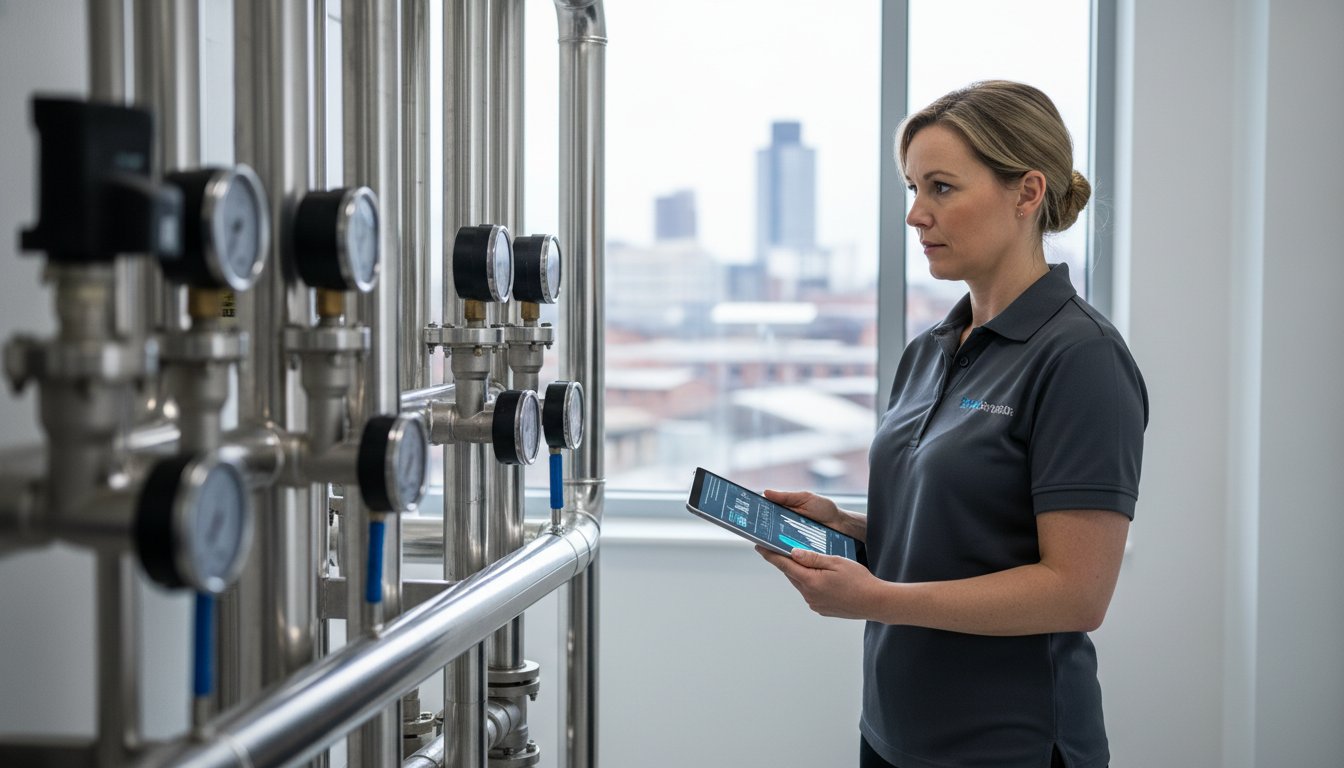
A professional legionnaires risk assessment for landlords is a systematic audit of your property’s entire water infrastructure. It isn't just a quick glance at the boiler; it's a technical deep-dive designed to identify every potential niche where bacteria could thrive. Our specialists follow a structured four-step process to ensure nothing is missed.
- Step 1: Physical Inspection. We conduct a thorough walk-through of the premises to map every hot and cold water outlet. This includes every tap, shower, and outdoor bib tap.
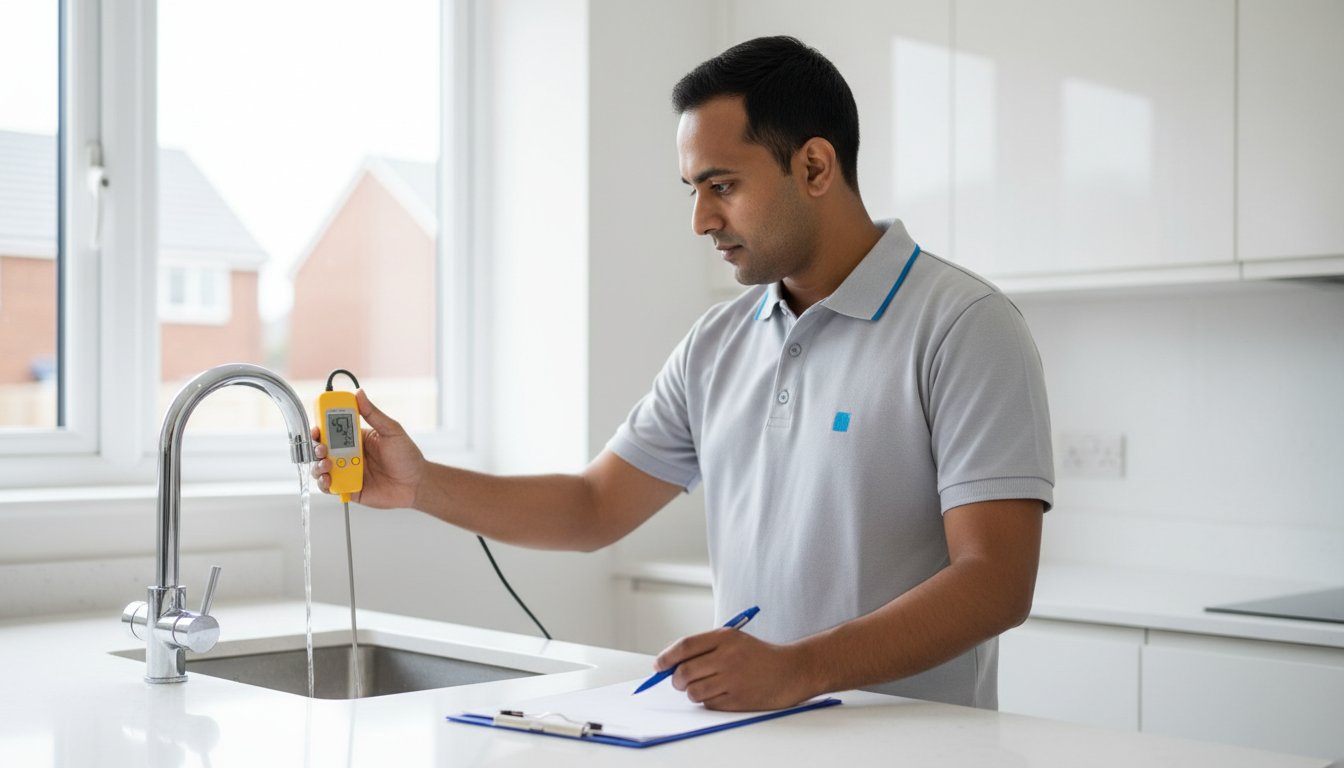
- Step 2: Temperature Testing. Legionella bacteria multiply rapidly between 20°C and 45°C. We use calibrated digital thermometers to ensure your water stays strictly outside this danger zone.
- Step 3: System Assessment. We inspect the "engine room" of your water system, including water heaters, calorifiers, and cold water storage tanks. We look specifically for signs of debris, rust, or stagnation.
- Step 4: Aerosol Identification. We identify components that create fine mist, such as showerheads and spray taps. These are the primary delivery mechanisms for the bacteria to reach the lungs.
Temperature Monitoring and Sentinel Points
Precise temperature control is your primary defence against bacterial growth. We verify that your calorifier stores water at 60°C to kill bacteria at the source, while cold water must remain below 20°C to keep organisms dormant. To confirm this, we measure "sentinel points," which are the outlets furthest from and nearest to the water source. If the furthest tap reaches 50°C within one minute, your system is circulating effectively. This data provides the technical backbone of your legionnaires risk assessment for landlords.
The Final Compliance Report: What You Receive
Once the onsite inspection concludes, you receive a comprehensive digital document. This isn't just a certificate; it's a legal shield. Your report includes an executive summary, a specific risk rating for the property, and a clear list of remedial actions. If we find a dead-leg pipe or a scaled showerhead, it's flagged with a priority level. Under the ACOP L8 guidelines updated in 2024, you must keep these records for at least five years to satisfy potential audits. This proactive safety management ensures you're protected and your tenants are safe.
Ensure your property meets the 2026 standards by booking a specialist today. Get your professional compliance report today.
Maintaining Compliance: Reviews and Vacant Properties
Compliance is never a "once and done" task. It's a continuous cycle of monitoring and maintenance that keeps your tenants safe and your legal liability low. A legionnaires risk assessment for landlords is a living document. If you treat it as a one-off administrative hurdle, you risk the assessment becoming obsolete the moment your property's plumbing or occupancy changes. Effective management requires a proactive routine and clear communication with those living in the property.
How Often Should Assessments Be Reviewed?
The HSE's ACoP L8 regulations don't specify a hard expiry date for assessments, but they demand reviews whenever there's reason to suspect the current report is no longer valid. In the UK rental market, a two-year review cycle is the established industry best practice. This 24-month window ensures that wear and tear on the water system hasn't created new stagnant "dead legs" or temperature fluctuations that could encourage bacterial growth.
You must trigger an immediate review if specific changes occur. These include installing a new boiler, altering the internal pipework, or a change in the tenant's vulnerability level. For example, if a new tenant moves in who is over the age of 65 or has a known respiratory condition, their increased risk profile necessitates a fresh look at your control measures. You should also provide tenants with a simple safety guide. Advise them to descale showerheads every 3 months and to flush all taps for two minutes if they've been away from the property for more than 7 days.
Managing Risks During Void Periods
Void periods represent the highest risk window for any landlord. When a property sits empty for 14 days or more, water stagnation is inevitable. Without regular flow, the protective chlorine levels in the mains water drop, and biofilm begins to coat the inside of your pipes. If the internal temperature of the building rises during a summer vacancy, Legionella bacteria can reach hazardous concentrations in less than 12 days.
To mitigate this, you must implement a weekly flushing regime. Every outlet, including toilets, showers, and outside taps, should be run for at least 2 minutes to move fresh water through the system. Our "Compliance Care" service is designed to handle these transitions for you. We provide the professional oversight needed to manage property turnovers safely, ensuring your legionnaires risk assessment for landlords remains robust even during tenant shifts. Keeping a dated log of these flushes is vital. This record-keeping serves as your primary evidence of "reasonable care" should an inspection or health query arise. We make this process easy, transforming a complex regulatory burden into total peace of mind.
Secure Your Property Portfolio for 2026
Maintaining safety in your rental properties isn't just a recommendation; it's a strict legal requirement under the Health and Safety at Work Act 1974. As we head into 2026, the HSE continues to prioritise ACOP L8 guidelines to prevent public health risks. You've seen that a legionnaires risk assessment for landlords must be completed by a competent person to ensure every water system meets rigorous safety standards. This process is vital for managing risks during tenant turnovers or when properties sit vacant for extended periods. We've simplified this regulatory burden through our specialist approach, providing fast, reliable UK-wide testing. Our detailed professional reports provide the legal protection you need, while expert advice and automated reminders ensure you never miss a future deadline. We've helped thousands of owners achieve 100% compliance with clear, tailored guidance for every property type. Take the first step toward total peace of mind and stress-free management today.
Get Your Professional Legionella Compliance Quote Today
Your property's safety is our priority, and we're here to make the entire process effortless.
Frequently Asked Questions
Do I need a Legionella certificate to rent out my house?
You don't need a specific "Legionella certificate" by law, but you must have a valid risk assessment on file. Under the Health and Safety at Work etc Act 1974, landlords are responsible for the health and safety of their tenants. While no official certificate exists, a professional report proves you've met your legal duties. This document protects you from potential fines of up to £20,000 in the event of a health inspection.
Can I carry out a Legionella risk assessment myself?
You can carry out a legionnaires risk assessment for landlords yourself if you're competent to do so. The HSE states you must understand the water system and identify risks like stagnant water or debris. However, most landlords choose professional assessments to ensure 100% compliance. Using a specialist removes the risk of overlooking hidden dangers like dead legs in pipework. We make safety easy, providing total peace of mind for your property.
How much does a landlord Legionella risk assessment cost in the UK?
A professional Legionella risk assessment in the UK typically costs between £50 and £150 for a standard domestic property. Prices vary based on the size of the building and the number of water outlets involved. For a small flat, you might pay closer to £60; large five-bedroom houses often reach £120. Investing in this service ensures you receive a high-quality report that meets all 2026 regulatory standards without any hidden fees.
How often does a landlord need to do a Legionella risk assessment?
There's no fixed legal expiry date, but the HSE recommends reviewing your assessment regularly, usually every 24 months. You must also conduct a new assessment if there's a significant change to the water system, such as a boiler replacement or a property remaining vacant for over 30 days. We make tracking these dates simple with our Compliance Care service, sending you a reminder before your next assessment is due to ensure continuous safety.
What happens if a tenant gets Legionnaires’ disease?
If a tenant contracts Legionnaires’ disease and you haven't managed the risks, you face severe legal consequences. Local authorities or the HSE can prosecute you under the Management of Health and Safety at Work Regulations 1999. Fines are often unlimited; serious cases of negligence can even lead to custodial sentences. Having a professional legionnaires risk assessment for landlords serves as vital evidence that you took all reasonable precautions to keep your tenants safe.
Is a Legionella risk assessment a legal requirement for HMOs?
Yes, a risk assessment is a strict legal requirement for Houses in Multiple Occupation (HMOs). Because HMOs often have complex water systems and higher occupancy rates, the risk of bacteria growth is significantly increased. You must assess all shared facilities and individual rooms to comply with the Housing Act 2004. Failing to provide this documentation can result in your HMO licence being revoked or a civil penalty of up to £30,000.
Do I need to test the water for Legionella bacteria in a lab?
You don't usually need to test water in a lab for standard domestic rental properties. Laboratory testing is only required if the risk assessment identifies a specific problem that can't be controlled or if the property has a high-risk system like a cooling tower. For 95% of UK landlords, a visual inspection and temperature check are sufficient. We focus on practical control measures to keep your water safe without the need for expensive laboratory fees.