Thinking that soft water makes your property "low risk" is a dangerous misconception that could lead to heavy HSE fines. While you don't have to fight the heavy limescale found in hard water regions, soft water is naturally more corrosive. This acidity eats away at your pipes, creating microscopic pits where biofilms and bacteria thrive. If you want to know how to manage legionella in soft water areas uk, you have to look beyond the lack of scale. In 2024, there were 472 confirmed cases of Legionnaires' disease in England and Wales; proving the risk is constant. With the UKHSA currently investigating a new cluster of cases in London as of March 2026, there's never been a more important time to verify your safety protocols.
We understand that regulatory requirements can feel like a burden when you're balancing property maintenance with legal duties. You want to protect your tenants without getting lost in technical jargon. This guide simplifies the process and shows why corrosion is just as risky as scaling. We'll provide a step-by-step compliance checklist to ensure your site meets ACoP L8 standards. By the end, you'll have a clear path to total compliance, turning a complex health risk into manageable peace of mind.
Key Takeaways
- Discover the specific maintenance priorities that differentiate soft water systems from hard water counterparts to avoid common compliance gaps.
- Implement the "Temperature is King" rule to ensure your hot water flow remains at 60°C and return at 50°C for maximum safety.
- Learn exactly how to manage legionella in soft water areas uk by prioritizing corrosion monitoring and specialized filtration over traditional descaling.
- Access a tailored 5-step framework designed to make your legal duties as a landlord or business owner simple and stress-free.
Understanding Legionella Risks in UK Soft Water Areas
Many property owners in the UK believe that soft water is a blessing for their plumbing. While it's true that you won't see the thick, white limescale deposits common in London or the South East, this absence of visible buildup often leads to a dangerous sense of complacency. Understanding how to manage legionella in soft water areas uk starts with acknowledging that water chemistry significantly impacts bacterial growth, even when the water seems "clean."
Your legal obligation to maintain water safety remains the same regardless of your postcode. Under the Health and Safety at Work etc. Act 1974 and COSHH regulations, duty holders must assess and control the risk of exposure to Legionnaires' disease. This respiratory condition is caused by inhaling small droplets of contaminated water, and its prevalence is a constant reminder that compliance isn't optional. Integrating water chemistry into your ACOP L8 compliance strategy is essential for protecting your tenants and your reputation.
What is Soft Water and Where is it Found?
Soft water contains low concentrations of ions, specifically calcium and magnesium. In the UK, this is typically defined as water with less than 60mg of calcium carbonate per litre. You'll find these conditions primarily in upland regions where the water source is surface water, such as lakes and reservoirs, rather than groundwater from chalky aquifers. Geographically, this covers most of Scotland, Wales, Northern Ireland, and parts of North West England like the Lake District.
Because surface water hasn't filtered through mineral-rich rock, it remains "hungry" for minerals. This makes it naturally more acidic and aggressive toward metal pipework. While hard water blocks pipes with scale, soft water works to dissolve them from the inside out. This creates a different set of maintenance challenges that require a specialized approach to safety.
The Myth of the 'Safe' Soft Water System
Landlords often fall into the trap of thinking that because their kettles are clear and their showerheads aren't blocked, their systems are safe. This is a myth. To understand what is Legionella, you must realize it doesn't need limescale to survive. It needs nutrients, warmth, and a place to hide. In soft water areas, the risk comes from corrosion rather than scale. Small pits and rough surfaces caused by acidic water provide the perfect "micro-niches" for biofilms to take root.
Neglecting a system because it looks clean is a fast track to HSE non-compliance. You still need to understand how to manage legionella in soft water areas uk through rigorous temperature monitoring and regular testing. A lack of visible wear doesn't mean your system is sterile; it just means the danger is hidden beneath the surface of your pipework. Proactive management is the only way to ensure your property remains safe and your legal duties are fully met.
Why Soft Water Presents Unique Challenges for Legionella Control
Soft water is often described by chemists as aggressive because its low mineral content makes it chemically unstable. Unlike hard water, which leaves behind a protective layer of limescale, soft water actively seeks out minerals from its environment. This means it attacks the very metal pipework it flows through. For property owners, this chemical hunger creates a hidden infrastructure crisis that directly impacts bacterial safety. Learning how to manage legionella in soft water areas uk requires a shift in focus from traditional descaling to active corrosion prevention.
The primary issue is corrosion. When soft water reacts with copper or galvanized steel, it causes pitting. These are tiny, microscopic craters on the inner surface of your pipes. These pits are more than just structural damage; they are perfect micro-niches where bacteria hide from heat and chemical treatments. A pipe that looks smooth on the outside might be riddled with bacterial hideouts on the inside. The UK Health and Safety Executive (HSE) Approved Code of Practice (ACOP L8) makes it clear that maintaining a clean system is a legal requirement. In soft water regions, clean doesn't just mean free of debris. It means managing the chemical balance to prevent an iron-rich environment from forming.
Iron is a critical nutrient for Legionella. As your pipes corrode, they release iron into the water. This acts as a high-calorie food source, allowing bacteria to multiply much faster than they would in a stable, non-corrosive system. Because these risks are often invisible to the naked eye, a professional risk assessment is the only way to truly verify that your system isn't breeding hidden colonies of bacteria.
Corrosion vs. Scaling: The Hidden Danger
Hard water causes scaling, which restricts flow and creates a visible mess. Soft water causes thinning and pitting. While scaling is easy to spot, corrosion is invisible until a pipe fails or a water test comes back positive. Copper and galvanized steel are especially vulnerable to this thinning. Rust and iron deposits don't just damage the pipes; they provide the essential minerals Legionella needs to thrive, effectively turning your plumbing into a nutrient-rich incubator.
Biofilm Development in Soft Water Environments
Biofilm is a resilient slime layer that sticks to the inside of your plumbing. In hard water areas, the constant abrasion from mineral particles can sometimes disrupt this growth. Soft water lacks this scrubbing effect, which can lead to faster biofilm development. These biofilms act as a biological fortress, shielding Legionella from temperatures that would normally kill it. When corrosion products like rust mix with this slime, they reinforce the biofilm's structure, making it even harder to eradicate through standard flushing alone.
Comparing Legionella Risks: Soft Water vs. Hard Water Systems
Whether your property sits in a hard water area like London or a soft water region in Scotland, the goal remains the same: preventing bacterial growth. However, the day-to-day reality of how to manage legionella in soft water areas uk looks very different from the routines used in the South East. While hard water systems struggle with calcification, soft water systems face the silent threat of acidity and iron-rich environments. Understanding these differences is the first step toward a tailored safety plan that actually works.
One of the biggest variables is pH. Soft water often has a lower pH, making it naturally more acidic. Research shows that Legionella bacteria thrive in a pH range between 6.7 and 9.1. If your soft water supply sits on the acidic side of neutral, it can create a welcoming environment for bacteria to colonize. This is why a "one size fits all" approach to water safety usually fails. Regardless of your water type, the legal starting point is a professional survey. You can find detailed information on the Legionella risk assessment cost to help you budget for this essential first step.
Maintenance Priority Shift
In hard water regions, your maintenance team likely spends hours descaling showerheads and heat exchangers. In soft water areas, these tasks are less frequent, but other risks take their place. Your priorities must shift toward:
- Corrosion Monitoring: Regularly checking for thinning pipes and pinhole leaks.
- Turbidity Checks: Inspecting for "red water" or iron sediment that indicates internal rusting.
- Sediment Removal: Flushing out the rust particles that settle in the bottom of calorifiers, as these provide nutrients for bacteria.
It's important to remember that temperature remains the ultimate control measure. Both systems must store hot water at 60°C and distribute it so it reaches outlets at 50°C within one minute. Soft water doesn't change the laws of physics or the biology of the bacteria.
The Role of Water Treatment Chemicals
Chemical dosing is a common tool for how to manage legionella in soft water areas uk, but it requires a careful touch. Chlorine and silver-hydrogen peroxide are effective disinfectants, but they can be more aggressive in soft water. If you over-treat a soft water system, you risk accelerating the corrosion of your copper pipes. This creates a vicious cycle: the chemicals kill the bacteria but damage the pipes, creating more pits for new bacteria to hide in. Using corrosion inhibitors alongside your disinfectants is often a legal and practical necessity to maintain system integrity while ensuring 100% compliance.
How to Manage Legionella in Soft Water Areas: A Step-by-Step Guide
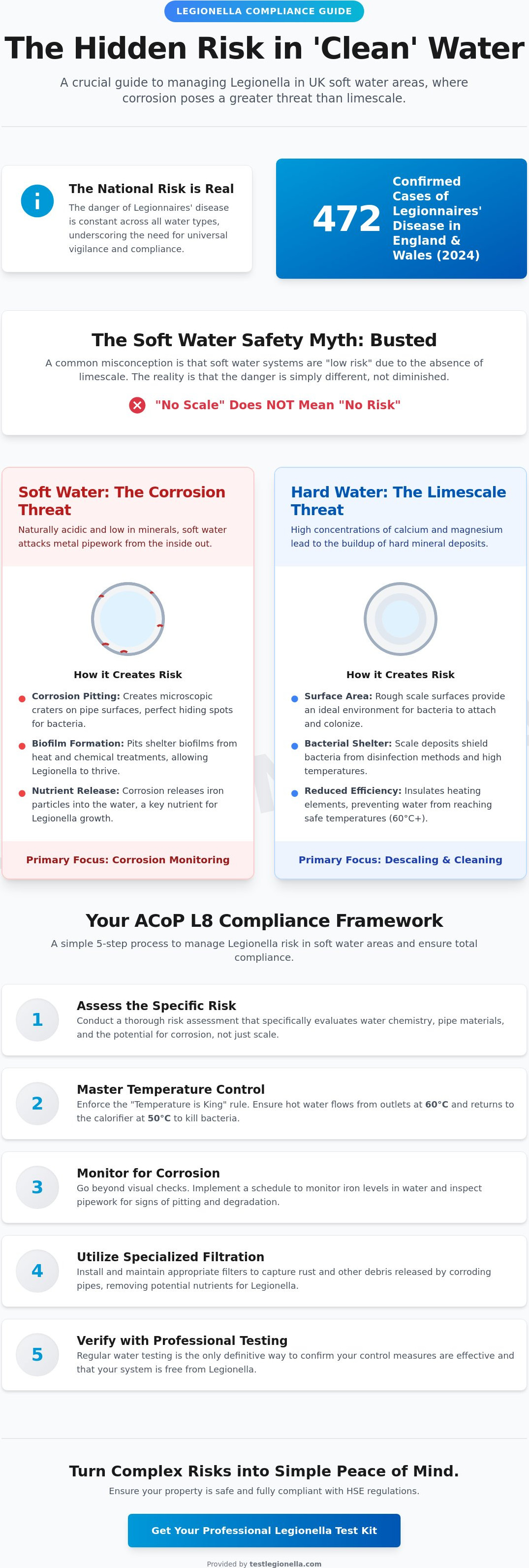
Managing a property in a soft water area requires more than just a passing glance at your boiler settings. While you don't have to worry about limescale, the aggressive nature of soft water means your infrastructure is under constant chemical attack. To stay compliant and protect your tenants, you need a structured approach that addresses these specific regional risks. This 5-step framework simplifies how to manage legionella in soft water areas uk, turning a complex legal burden into a manageable routine.
Step 1: Conduct a Professional Risk Assessment
Attempting a DIY risk assessment is a high-risk strategy that often leads to HSE non-compliance. A competent person doesn't just look at the boiler; they examine the entire system for signs of soft water corrosion, such as pinhole leaks or iron deposits. They'll also identify "dead legs," which are sections of redundant pipework where water stagnates and bacteria multiply. A Written Scheme of Control is the legally required roadmap for your water safety management. Without this document, you lack a clear path to compliance and remain vulnerable to legal action.
Step 2: Implement Rigorous Temperature Controls
Temperature is your primary weapon against bacterial growth. You must store hot water at 60°C or higher to kill bacteria at the source. This water must reach your furthest outlets at 50°C within one minute of opening the tap. Conversely, cold water must be kept below 20°C to prevent the "danger zone" where bacteria thrive. Because 60°C water causes instant scalding, you should install Thermostatic Mixing Valves (TMVs) at the point of use. Log these temperatures monthly in a dedicated compliance folder to prove your system is under control.
Step 3: Manage Stagnation and System Cleanliness
Stagnation is a major risk factor in vacant units or guest rooms. You must implement a weekly flushing regime for all infrequently used outlets, running both hot and cold taps for several minutes to clear the lines. Additionally, showerheads and hoses require quarterly cleaning and disinfection to remove the biofilm that builds up in the spray heads. In soft water areas, this biofilm can be stickier and more resilient due to the lack of mineral abrasion. If you're unsure if your current regime meets the standard, get your professional compliance score today to identify any gaps in your safety plan.
Step 4: Monitor for System Corrosion
Soft water's acidity means you must physically inspect your system for signs of thinning and pitting at least once a year. Look for "red water" or orange staining in sinks, which indicates that iron is leaching from your pipes and providing a food source for bacteria. Early detection of corrosion allows you to implement inhibitors before a major outbreak occurs.
Step 5: Regular Water Sampling
The final step is verification. While temperature logs provide a daily snapshot, professional water sampling is the only way to confirm your system is actually free from Legionella. In soft water regions, this testing is vital because the lack of visible scale can mask the biological activity happening inside your corroded pipework.
Ensuring Compliance: Professional Testing for Peace of Mind
Implementing a maintenance regime is the foundation of safety, but professional testing is the only way to verify your efforts are working. While temperature logs show you're following the rules, a laboratory analysis proves the bacteria aren't present. In regions where aggressive water chemistry hides risks behind corrosion, understanding how to manage legionella in soft water areas uk requires this final layer of scientific certainty. It transforms your regulatory burden into a documented record of safety and competence.
A professional Legionella report is far more than a simple "pass" or "fail" notification. It's a comprehensive compliance document that includes detailed UKAS-accredited laboratory analysis and a list of prioritized remedial actions. If a sample shows elevated bacterial levels, the report provides a clear, step-by-step recovery plan. We also include automated reminders for your future assessments. This ensures you never miss a deadline, keeping your property protected year-round without the stress of manual tracking or the fear of HSE fines.
When Should You Test Your Water?
A risk assessment is a legal requirement for all properties, but physical water sampling becomes a necessity in specific high-risk scenarios. If you've recently completed a refurbishment or made significant changes to your pipework, you must test the water before the system returns to normal use. Systems serving high-risk individuals, such as the elderly or those with respiratory issues, also require more frequent sampling. With the UKHSA investigating an increase in cases in London as of March 2026, many property owners are choosing to test now to ensure total peace of mind. Relying on UKAS-accredited results removes the guesswork and provides a robust legal defense if your safety protocols are ever questioned.
Why Choose Test Legionella for Your Property?
We specialize in taking the complexity out of health and safety. Our "Compliance Care" approach is designed for busy landlords and business owners who need fast, reliable results without the headache of dense legal jargon. We understand the regional variations in UK water and tailor our testing to address the specific corrosion risks found in soft water areas. Our philosophy is simple: we make compliance easy. By acting as your efficient partner, we help you navigate the maze of HSE regulations so you can focus on running your business with confidence.
Don't leave your legal duties to chance. Get your professional Legionella compliance quote today and secure the expert support your property deserves.
Take the Next Step Toward Total Water Safety
Managing water safety doesn't have to be a source of constant stress. You now understand that while soft water lacks limescale, its aggressive nature requires a specialized focus on corrosion monitoring and iron control. By following our 5-step framework and maintaining strict temperature thresholds, you're already moving toward fulfilling your legal duties under ACoP L8. Mastering how to manage legionella in soft water areas uk is about moving from uncertainty to documented safety.
Our fast and reliable national service provides the expertise you need to protect your tenants and your business. We deliver professional compliance reports backed by UKAS accredited lab testing, ensuring your records are audit-ready and robust. This is especially vital given the 472 confirmed cases in England and Wales in 2024 and the ongoing investigations in London as of March 2026. Secure your property with a professional Legionella Risk Assessment and transform your regulatory burden into long-term peace of mind. Let us handle the technical logistics while you enjoy the confidence of being fully protected.
Frequently Asked Questions
Is Legionella risk lower in soft water areas?
Legionella risk isn't lower in soft water regions; it's simply different. While you won't face the heavy limescale found in hard water areas, soft water is more corrosive to metal pipework. This acidity creates microscopic pits and releases iron, which acts as a vital nutrient for bacteria. You must remain just as vigilant to ensure full compliance with UK health and safety laws.
Can I do my own Legionella risk assessment in a soft water area?
You can legally conduct your own assessment if you're a "competent person" with the necessary training and knowledge. However, identifying specific corrosion risks and "dead legs" in a soft water system requires specialist expertise. Most landlords choose a professional service to avoid the risk of HSE non-compliance and the potential for heavy fines if a risk is missed.
How often should I flush my taps in a soft water property?
You should flush all infrequently used taps and showerheads at least once a week. Run the water for several minutes to ensure the entire length of the pipework is cleared of stagnant water. This simple routine is a critical part of how to manage legionella in soft water areas uk and prevents bacteria from colonizing quiet sections of your plumbing system.
What is the 'danger zone' for Legionella growth in soft water?
The danger zone for bacterial growth is between 20°C and 45°C. In this temperature range, Legionella bacteria multiply rapidly, especially when fueled by iron from corroded pipes. To maintain safety, ensure your cold water stays below 20°C and your hot water is stored at 60°C or higher. These thresholds are the same for both hard and soft water systems.
Do soft water systems need different chemicals for disinfection?
Soft water systems use the same primary disinfectants, such as chlorine, but they require more precise dosing. Because soft water is naturally aggressive, over-treatment can accelerate pipe corrosion. This is a key factor in how to manage legionella in soft water areas uk safely. You should often use corrosion inhibitors alongside biocides to protect your infrastructure while keeping the water sterile.
How much does a professional Legionella assessment cost in the UK?
The cost of a professional assessment varies based on the size and complexity of your water system. Factors include the number of outlets, the type of property, and the specific location. For a detailed breakdown of current market rates and what influences the price, you can consult our published price guide or request a tailored quote for your site today.
What happens if I don't have a Legionella risk assessment for my rental property?
Failing to provide a valid risk assessment is a breach of the Health and Safety at Work etc. Act 1974. If an outbreak occurs and you're found negligent, you could face unlimited fines or criminal prosecution. Beyond the legal risks, you're responsible for the health and safety of your tenants, making a professional assessment a vital moral and legal duty.
Can Legionella grow in cold water tanks in soft water areas?
Yes, Legionella can grow in cold water tanks if the temperature rises above 20°C or if sediment accumulates. In soft water areas, rust particles from corroding components often settle at the bottom of the tank. This creates a nutrient-rich "sludge" that supports biofilm growth, making regular tank inspections and professional cleaning essential for maintaining a safe water supply.